California Seller Guide
How Cash Home Buyers Work in California
Selling a home for cash in California is becoming more common, but most homeowners do not understand how cash buyers actually work. There are different buyer types, different processes, and different expectations. This guide explains the main types of cash home buyers, how each one operates, and what sellers should ask before signing anything.
No hype. No company comparisons. Just clean, direct information homeowners can use when deciding who they want to work with.

What Most Sellers Get Wrong About “Cash Buyers”
The phrase cash buyer sounds simple, but it covers several very different business models. Some buyers really intend to close with their own funds. Others are trying to control the property first and figure out the buyer later. Some rely on lender-like private money. Others are only comfortable buying homes that fit narrow condition or pricing standards.
That is why a seller should never assume every cash offer carries the same level of certainty. The right question is not just “Are you paying cash?” The better question is “How exactly do you plan to close this purchase, and what could stop you after I sign?”
Wholesalers — Contract First, Buyer Later
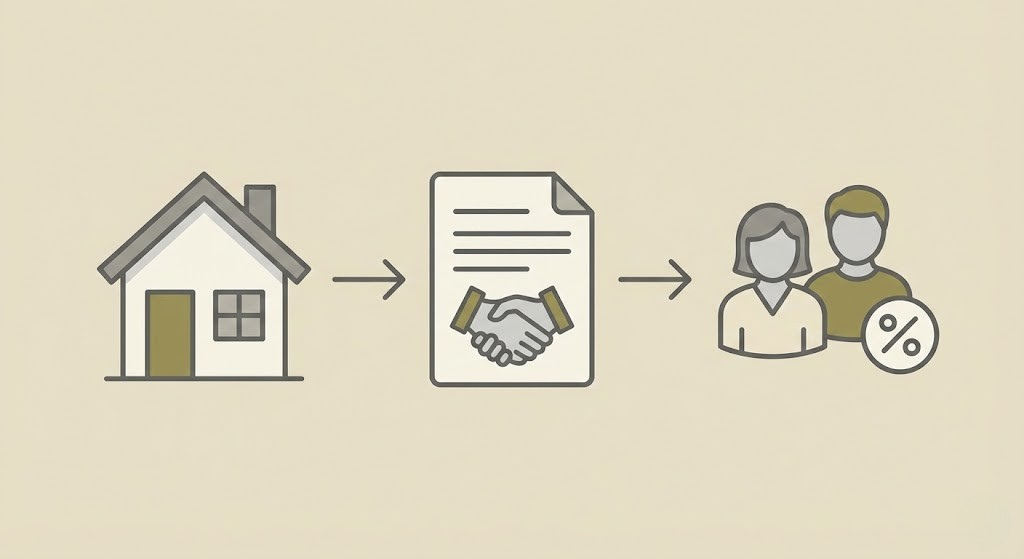
A wholesaler is someone who signs a purchase contract with the seller but does not plan to buy the house themselves. Their goal is to assign the contract to a real buyer, usually another investor, for a fee.
- They usually do not use their own money.
- They often want extra access to the home.
- They usually require the right to assign the contract.
- They may depend on finding another buyer before closing.
- Their timeline can be inconsistent.
Good for: Homes needing work.
Risk: The deal can fall apart if they cannot find a final buyer.
This structure is not automatically bad, but it creates more moving parts. If the wholesaler cannot find someone willing to step into the contract, the seller may end up back at square one after losing valuable time. That is especially painful for owners dealing with probate, repairs, relocation, or urgent financial deadlines.
Private Buyers — One Individual Purchasing a Home
A private buyer is a single person using personal funds or savings to buy the home.
- Usually a simple and direct process.
- May want inspections.
- Usually buys fewer homes per year.
- May need time for financing or partner approval.
Good for: Sellers who want a straightforward transaction.
Risk: They may back out if inspections reveal repairs.
Private buyers can feel easier to talk to because the process is more personal, but that does not always mean the closing path is stronger. Some private buyers are committed and well prepared. Others are still deciding, still verifying funds, or still getting comfortable with the condition of the home after they already made an offer.
Flippers — Buy, Fix, and Resell
A flipper buys with the intention of renovating and reselling the property.
- Very repair-focused.
- They rely heavily on contractor bids.
- They often use hard money loans, not true cash.
- They may renegotiate if repairs are bigger than expected.
Good for: Houses needing updates.
Risk: Price changes after inspections are very common.
Because flippers depend on resale margin, their numbers usually need to be tight. If labor, materials, or hidden repairs come in higher than expected, the seller often feels that pressure next. That is one reason why price reductions late in the process happen so often with this buyer type.
Hedge Fund or Institutional Buyers — Big Capital Groups
These buyers pool funds from investors and purchase properties at scale.
- Strong purchasing power.
- Typically buy homes in decent condition.
- Follow strict internal criteria.
- Often slower than advertised.
- May require multiple inspections.
Good for: Homes in good condition.
Risk: Slow process and strict underwriting rules.
Their capital can be real, but their process is often not flexible. A property that looks acceptable at first can still get rejected internally once photos, inspections, or market data go through a second round of review. Sellers who need speed should pay close attention to how much discretion the local representative actually has.
The Assignment Contract — What It Actually Means
An assignment contract allows the buyer to sell their place in the contract to another buyer.
- Very common with wholesalers.
- You may not know who your final buyer is.
- You may see multiple new people at your house.
- Closing may depend on third-party approval.
This is not automatically bad, but homeowners should understand exactly how it works before signing.
If the contract can be assigned, the seller should know whether the original buyer is still responsible if the end buyer fails. Sellers should also know whether marketing access will increase, whether the buyer plans to bring additional people through the home, and whether the contract still closes on time if the assignment process drags.
Who Actually Uses Cash?
Not everyone advertising a “cash offer” is using their own funds. That is why sellers should always ask for proof of funds.
- Wholesaler: Rarely uses actual cash. Usually relies on assigning the contract.
- Private Buyer: Sometimes uses actual cash. Often depends on savings.
- Flipper: Usually uses hard money, not true cash.
- Hedge Fund: Usually has access to real capital but may move slowly.
- Licensed Contractor-Buyer: Often uses actual funds and usually moves faster and more accurately.
Ask this directly: Can you show proof of funds?
Proof of funds matters because it separates marketing language from actual closing ability. A real buyer should be able to show that funds are available, usable, and consistent with the person or entity on the contract. If the paperwork is vague or the names do not match, that is worth slowing down for.
Who Closes Fast vs. Slow
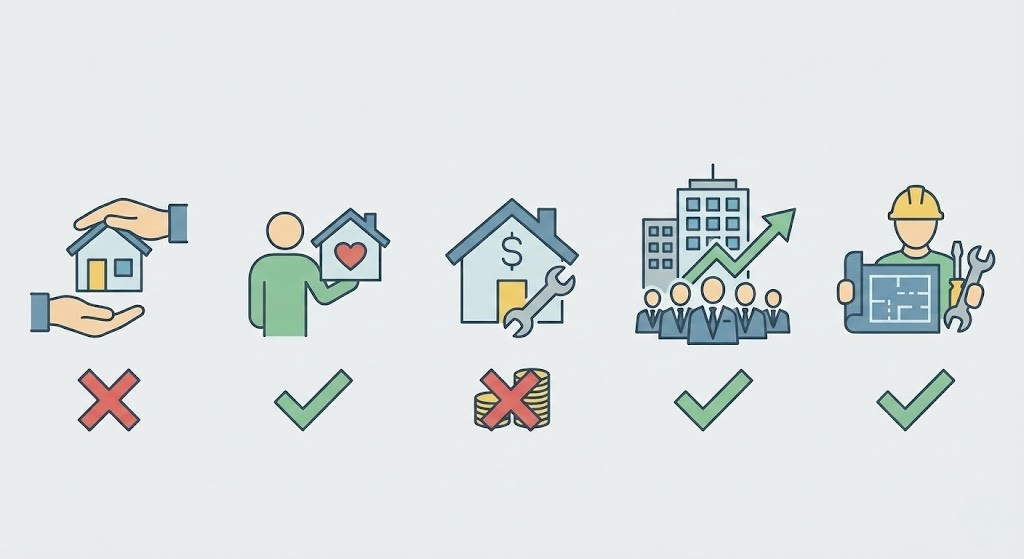
Fast closers usually include:
- True cash buyers
- Licensed contractor-buyers
- Buyers who do not need inspections
- Buyers who do not rely on loan underwriting
Slow closers usually include:
- Hedge funds
- Buyers needing partner approval
- Hard-money buyers needing appraisals
- Wholesalers searching for end buyers
Speed is not just about marketing claims. It comes from fewer approvals, fewer people involved, better repair knowledge, and more direct decision-making. Sellers should always ask what could realistically delay closing, even if the buyer sounds confident on the phone.
Who Drops the Price After Contract?
This usually happens when:
- The buyer’s repair estimates were wrong.
- The buyer has no license and misjudged the work.
- The buyer depends on resale profit.
- The buyer is wholesaling and lost the end buyer.
Ask this directly: Is your offer contingent on inspections or approval?
A seller should also ask how the buyer reached the number in the first place. If the offer was based on rough assumptions instead of real construction knowledge, there is a higher chance the deal changes once the buyer walks the property with more people or gets formal bids.
The Only Buyer Type With Construction Accuracy
Most cash buyers do not hold contractor licenses. A licensed buyer, such as Twin Home Buyer, has a major advantage because they can evaluate repairs more accurately from the start.
- Can evaluate repairs accurately
- Does not need to renegotiate after inspections
- Understands plumbing, roofing, foundation, and structural issues
- Can often close without partners or outside bids
A General B license and a C-36 plumbing license can make a major difference in speed, accuracy, and reliability.
This matters most when a house has real issues. Foundation movement, plumbing concerns, roof age, outdated electrical work, water damage, and unpermitted changes can all scare off buyers who do not really understand repair cost. A buyer with actual construction experience is less likely to overreact, misprice the job, or create late-stage surprises.
How the California Cash Sale Process Usually Works
Although every buyer has their own approach, most cash sales follow the same basic sequence. The seller reaches out, the buyer gathers property details, a walkthrough happens if needed, an offer is made, escrow opens, title is reviewed, and closing is scheduled. The difference is how many people are involved and how many things can still go wrong between offer and funding.
A cleaner process usually means fewer approvals, fewer inspections, fewer outside lenders, and fewer opportunities for the number to change. That is why sellers should always ask not just what happens first, but what happens after the contract is signed.
How to Choose the Safest Cash Buyer
Ask these questions before you sign anything:
- Are you a wholesaler, flipper, private buyer, or licensed contractor?
- Do you use your own funds or hard money?
- Do you assign contracts?
- Do you require inspections?
- Do you renegotiate after walkthroughs?
- Are you licensed?
- Can you close on my timeline?
- Can I leave belongings behind?
The answers to those questions separate real buyers from risky ones.
Sellers should also pay attention to how clearly the buyer communicates. Strong buyers tend to answer direct questions directly. Risky buyers often stay vague, dodge specifics, or make the process sound easier than it really is. Confidence is not the same thing as closing ability.
Need a Clear, Reliable As-Is Offer?
If you want a buyer who understands repairs, uses a direct process, and can explain the numbers clearly, reach out today.
