
A lot of Bay Area homeowners think selling as-is means the sale will automatically be fast. Know what causes as-is home sale delays Bay Area
Sometimes it can be.
But selling as-is does not fix every problem.
The house still has to get through escrow. The right person still has to sign. Title still has to be clear enough to close. If there are tenants, missing documents, court issues, old loans, code problems, or buyer financing problems, the sale can still slow down.
Selling as-is can reduce repair work, but it does not automatically remove escrow risk.
That is the part many sellers do not realize until they are already in the middle of the process.
Can an As-Is Home Sale Still Be Delayed?
Yes. An as-is home sale can still be delayed by unclear ownership, missing documents, title issues, liens, bankruptcy, divorce, court involvement, tenants, inspection findings, buyer financing, appraisal problems, code violations, open permits, or local requirements.
Selling as-is may reduce repair obligations, but escrow still needs the right paperwork, the right authority, and a buyer who can actually close.
If you are still learning what selling as-is means, you may want to start with Twin Home Buyer’s guide to selling a Bay Area house as-is.
Not sure what could delay your sale? Twin Home Buyer can review the property as-is and help you compare your options before you spend money on repairs, cleanout, or listing prep. You can review your as-is sale options here.
What Selling As-Is Does and Does Not Mean
Selling as-is usually means the seller is not planning to make repairs before closing. The buyer is looking at the property in its current condition and deciding whether they are willing to move forward.
But as-is does not mean everything else disappears.
It does not mean escrow requirements go away. It does not mean title problems fix themselves. It does not mean tenant, ownership, court, or paperwork issues no longer matter. It does not mean a buyer, lender, appraiser, title company, or escrow officer will ignore serious problems with the property or the documents.
Most importantly:
As-is does not mean no disclosures or no paperwork.
If the seller knows about property problems, title issues, tenant issues, unpermitted work, or other concerns, those issues may still need to be reviewed or disclosed depending on the situation. The California Department of Real Estate publishes guidance on common disclosures in real property transactions, so sellers should not assume that “as-is” means “say nothing and move on.”
That does not mean every as-is sale is complicated. It means the seller should understand what still has to be handled before assuming the sale will be simple.
For example, an older Bay Area house may look like a simple as-is sale at first. But once escrow starts, issues can show up: an old garage conversion that was never permitted, a tenant who will not provide access, a deceased owner still on title, missing trust documents, or a buyer whose lender gets nervous after the inspection.
That is why as-is does not always mean simple.
The house matters.
The paperwork matters.
The people matter.
And the buyer’s ability to close still matters.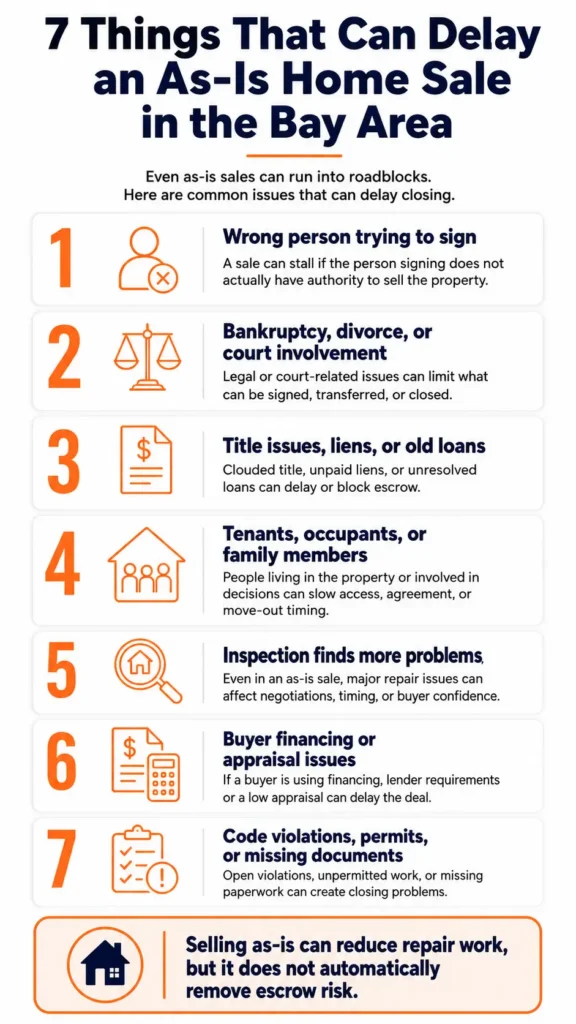
1. The Wrong Person Is Trying to Sign
This is one of the first things to understand.
A buyer can like the property. A buyer can make an offer. A buyer can even have cash. But if the person signing does not have authority to sell, escrow can run into problems.
This comes up often when the property is connected to:
- a trust
- an estate
- multiple heirs
- a deceased owner
- an LLC
- a divorce
- a family dispute
- a surviving spouse
- an executor, administrator, or trustee
Sometimes the person talking to the buyer is the right family member, but not the legal signer. Sometimes the seller believes they can sell because they have been managing the house, paying bills, or handling family decisions. But escrow may still need the correct documents before closing can move forward.
That paperwork can include things like a death certificate, trust documents, letters testamentary, letters of administration, ID documents, or other authorization documents.
If someone has passed away and the property is part of an estate, the family may need to understand who has authority to act for the estate. The California Courts self-help site has a helpful starting point on property after someone dies.
A fast offer does not matter if the wrong person is signing.
If the property was inherited, the first step is not always asking what the house is worth. The first step is understanding who has authority to sell, who else is involved, and what paperwork may be needed.
2. Bankruptcy, Divorce, or Court Involvement Can Affect Approval
Sometimes the seller wants to move fast, but the paperwork or court process controls the speed.
If the property is tied to bankruptcy, divorce, probate, a court order, or a legal dispute, the seller may need to confirm who has authority to approve the sale. That does not automatically mean the house cannot be sold. It means the process may be different from a normal sale.
For example, a property involved in a divorce may require both parties to agree or sign. A bankruptcy matter may involve a trustee or court review. A probate situation may require the correct person to be appointed before the sale can move forward.
If bankruptcy is involved, sellers should be careful about assuming the sale will work like a normal transaction. The U.S. Courts provides general information through Bankruptcy Basics, but sellers should still speak with the right professional about their specific situation.
This is where sellers need to slow down and make sure they understand what they actually own, who can approve the sale, and what documents may be required.
Twin Home Buyer does not provide legal, bankruptcy, divorce, probate, or court-related services. These are common situations that may delay a sale. If court approval, divorce, bankruptcy, probate, or legal authority may be involved, sellers should speak with the right legal professional before making decisions.
3. Title Issues, Liens, Old Loans, or Missing Payoff Information Show Up
Title issues can slow down a sale even when the seller wants to close and the buyer is ready.
Some sellers do not know there is a problem until title is opened. Then escrow finds something that needs to be reviewed, paid off, released, corrected, or explained.
Common issues can include:
- old mortgages
- unknown loan balances
- missing payoff information
- unpaid property taxes
- judgment liens
- tax liens
- contractor liens
- unreleased loans
- name mismatches
- old ownership problems
- missing lien releases
This does not mean every title issue kills the sale. But it can change the timeline.
For example, the California Franchise Tax Board explains that a state tax lien can attach to California real or personal property and may affect the ability to sell, refinance, or transfer property. Sellers dealing with tax liens can review the FTB’s lien information as a starting point.
Cash can help with speed and flexibility, but cash does not magically fix title. Escrow and title still need the right information, signatures, payoff instructions, and closing documents.
If you are dealing with old loans, liens, or title questions, you can read more about title issues that can delay closing.
If title, liens, old loans, or missing payoff information are creating uncertainty, Twin Home Buyer can look at the situation and help you understand what may need to be reviewed before closing. You can ask about title or lien issues here.
4. Tenants, Occupants, or Family Members Create Access Problems
The buyer is not just buying the house. They are also dealing with whoever is inside the property.
A tenant, occupant, or family member can affect the sale because access matters. The buyer may need to see the property, understand the condition, confirm occupancy, and know what situation they are taking on.
This can get complicated when:
- a tenant will not allow access
- rent is unpaid
- the lease status is unclear
- a family member is living in the house
- the seller inherited the house with someone still inside
- the property cannot be shown easily
- the seller wants privacy and fewer disruptions
- the buyer cannot inspect properly
A traditional buyer may not want to deal with a tenant or occupant issue. A lender may also have questions depending on the buyer type and property situation.
If tenants are involved, sellers should review the lease and confirm the rules with the right professional. The California Department of Real Estate publishes a California landlord and tenant rights guide that can help sellers understand the issue more carefully.
That does not mean selling is impossible. It means the seller needs the right strategy.
If someone is still living in the property, it may help to review Twin Home Buyer’s page on selling with tenants still in the property.
If there are tenants or occupants in the property, selling may require a different approach. Twin Home Buyer can talk through whether selling as-is with the occupant in place may fit your situation. You can discuss a tenant-occupied property here.
5. The Inspection Finds More Than Expected
Even in an as-is sale, some buyers still inspect.
That is where the deal can change. The buyer may walk in thinking the house needs basic work, then discover bigger issues after inspection.
Common inspection problems can include:
- roof damage
- foundation movement
- old plumbing
- outdated electrical
- pest or termite damage
- drainage problems
- fire damage
- water damage
- mold concerns
- hoarder conditions
- unsafe areas of the property
- years of deferred maintenance
Older Bay Area houses can have layers of repairs. One issue can lead to another. A buyer may start with one repair estimate and then realize the work is bigger than expected.
The problem is not only getting an offer. The problem is whether that offer survives inspection.
This is why a high offer on paper is not always the strongest offer. If the buyer gets nervous, asks for credits, renegotiates, or cancels, the seller may end up starting over.
If you are worried the house may not survive a traditional inspection, you can read more about why a Bay Area home sale can fall through after inspection or appraisal.
6. Buyer Financing or Appraisal Does Not Match the Property Condition
A buyer may like the house, but the lender may not.
This matters when the buyer is using financing. The property condition, appraisal, and lender review all have to line up. If the house has major damage, safety issues, missing systems, or questionable repairs, the lender or appraiser may raise concerns.
This can happen with:
- major roof damage
- unsafe electrical
- missing kitchen or bathroom components
- foundation issues
- fire or water damage
- unpermitted work
- serious deferred maintenance
- health or safety concerns
A seller may think, “The buyer already made an offer, so we are good.” But the offer is only one part of the deal. If the buyer’s financing does not work, the deal can slow down or fall apart.
The highest offer on paper is not always the strongest offer if the buyer cannot close.
Fannie Mae’s general appraisal requirements are one example of how financed transactions can involve appraisal and underwriting standards. The exact issue depends on the buyer’s loan type, lender, appraisal, and property condition.
If the property condition may make lender financing difficult, it can be worth comparing whether a direct sale makes more sense than waiting for a financed buyer.
7. Code Violations, Open Permits, Unpermitted Work, Local Requirements, or Missing Documents Create Questions
This section can get messy because these issues are different, but they all have one thing in common: they can create questions during escrow.
Property-related issues
Some houses have code violations, open permits, unpermitted additions, garage conversions, city notices, or work that was done years ago without clear records.
In the Bay Area, this can happen with older houses, additions, converted garages, older electrical work, back units, or improvements made by previous owners. The seller may not even know the full history until questions come up during the sale.
These issues can affect buyer confidence, repair estimates, disclosures, financing, and timing.
For permit-related questions, sellers should check with the local building department. The California Contractors State License Board explains building permit requirements and notes that local code requirements can vary by city and county.
Document-related issues
Sometimes the issue is not the house itself. It is the paperwork.
Escrow may need documents such as:
- seller IDs
- payoff information
- trust documents
- death certificates
- estate documents
- court letters
- lien releases
- HOA documents
- condo documents
- authorization paperwork
If those documents are missing, incomplete, or unclear, the sale can slow down.
Property-type or local requirement issues
Some properties may also involve HOA, condo, city, or local transfer-related requirements. The details depend on the property, location, and paperwork.
Sellers should not assume every Bay Area city or property type works the same way. Some issues may need review by the city, HOA, title company, escrow officer, attorney, or another qualified professional.
Sometimes the issue is not whether someone wants to buy the property. The issue is whether the paperwork is complete enough to close.
Before You Sell As-Is, Ask These Questions
Before deciding whether to repair, list, wait, or sell directly, ask yourself:
- Who is legally allowed to sign?
- Is the property in a trust, estate, LLC, or multiple names?
- Are there heirs, co-owners, a spouse, trustee, executor, administrator, or court involved?
- Is there a divorce, bankruptcy, probate, or legal dispute connected to the property?
- Are there tenants, occupants, or family members living in the house?
- Are there liens, unpaid taxes, old loans, or missing payoff documents?
- Are there open permits, code violations, HOA issues, or unpermitted work?
- Are important documents missing, such as a death certificate, trust documents, letters, payoff information, or IDs?
- Will the buyer need financing?
- Can the house survive inspection, appraisal, and lender review?
- Is your priority speed, certainty, privacy, highest price, or less stress?
If you checked several items on this list, the sale may need more planning before you decide whether to list, repair, wait, or sell directly. Twin Home Buyer can look at the house as-is and help you compare the practical options. You can compare your selling options here.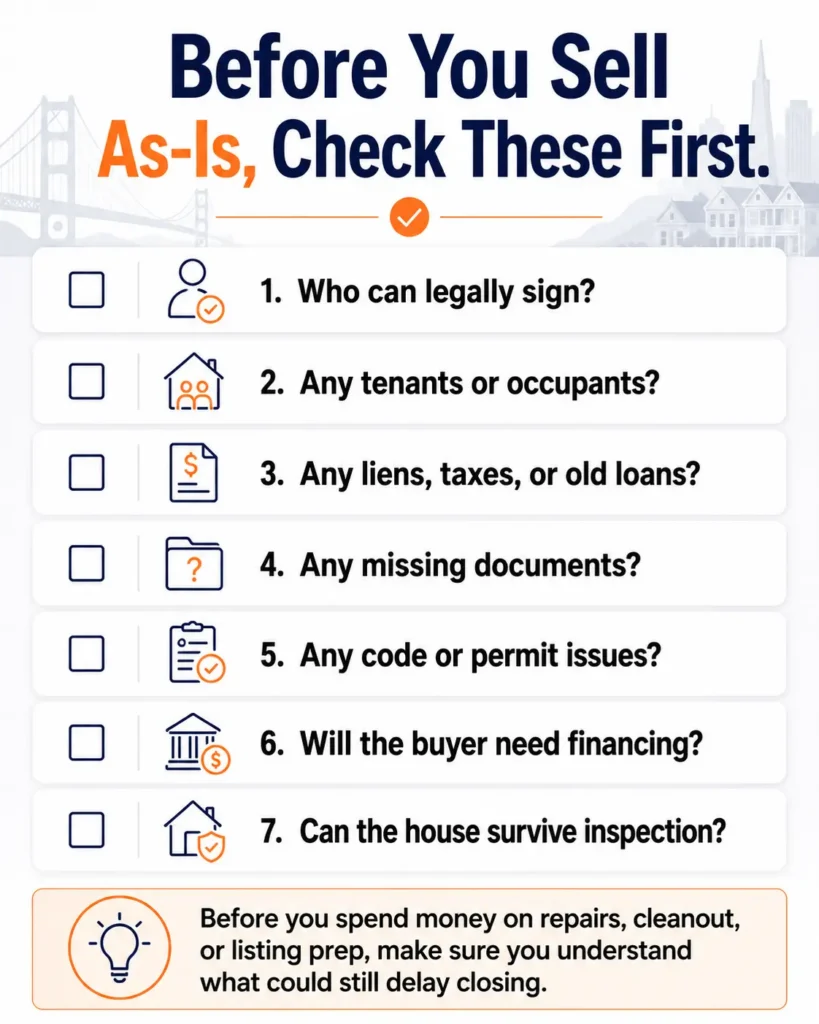
A Quick Note About Legal, Title, Tax, Tenant, and Code Issues
Twin Home Buyer does not provide legal, tax, title, tenant, bankruptcy, divorce, probate, or code-compliance services.
The issues in this article are general real estate situations that can delay or complicate a sale. Every property is different. If your situation involves legal authority, court approval, title problems, liens, taxes, tenants, HOA rules, code violations, or missing documents, you should confirm the details with the right professional before making a decision.
Does This Mean Selling As-Is Is a Bad Idea?
No. Selling as-is can still make sense.
It may make sense if the seller wants to avoid repairs, cleanout, showings, contractor delays, or uncertainty. It may also make sense if the house is older, damaged, tenant-occupied, inherited, or difficult for a traditional buyer to finance.
But sellers should understand that as-is does not erase every issue.
It does not automatically fix:
- title problems
- ownership issues
- tenant issues
- court approval issues
- disclosure questions
- code concerns
- buyer financing risk
- missing paperwork
The right answer depends on the house, the people involved, the paperwork, the timeline, and what the seller actually wants.
When a Direct As-Is Sale May Make Sense
A direct as-is sale may make sense when:
- the house needs major repairs
- the seller does not want to fix or clean out the property
- the house is tenant-occupied
- the seller inherited the property
- there are missing documents that need to be understood before listing
- the seller wants fewer showings
- the property may not work for a financed buyer
- the seller wants speed, privacy, or certainty
- the seller wants to compare options before spending money
That does not mean selling directly is always the best option. Sometimes it is. Sometimes listing is better. Sometimes the seller needs to talk to an attorney, title company, CPA, city office, or other professional first.
The point is to understand the situation before making the decision.
When Listing May Be the Better Option
Listing with an agent may be better when:
- the house is clean and financeable
- the seller has time
- the seller can afford repairs
- the property will show well
- there are no major tenant, title, court, or condition issues
- the seller wants full market exposure
- the seller is comfortable with showings, inspections, and buyer negotiations
If the house is in good shape and the seller has time, a traditional listing may bring a stronger price. That is important to say because selling as-is is not about pushing every seller into one option. It is about helping the seller understand the tradeoffs.
What Twin Home Buyer Looks At
When Twin Home Buyer reviews an as-is property, the question is not just, “What is the address?”
The real questions are:
- What condition is the house in?
- Who owns it?
- Who can sign?
- Are there tenants or occupants?
- Are there liens, loans, or title concerns?
- Is the house vacant, damaged, inherited, or occupied?
- What timeline does the seller need?
- Does the seller want speed, privacy, certainty, or the highest possible open-market price?
- Is a direct sale actually the right fit?
A fast cash offer only helps if the right person can sign, the paperwork is clear enough to close, and the deal can move without surprises.
FAQs About As-Is Home Sale Delays in the Bay Area
Can an as-is home sale still fall through?
Yes. An as-is sale can still fall through if the buyer loses confidence, financing does not work, inspection issues create a problem, title is not clear, or the right person cannot sign.
Does selling as-is mean no disclosures?
No. As-is does not mean no disclosures or no paperwork. Sellers may still need to disclose known issues or provide documents depending on the property and situation.
Can a cash buyer close if there are title problems?
A cash buyer may help with speed and flexibility, but cash does not automatically fix title. Escrow and title still need the right ownership, signatures, payoff information, and closing instructions.
Can I sell as-is if there are tenants?
It may be possible, but tenant status, lease terms, access, rent, cooperation, and local rules can affect the sale. Sellers should understand the situation before assuming the sale will be simple.
Should I repair the house first or sell it as-is?
It depends on repair cost, time, risk, market value, and net proceeds. Repairs only make sense if they improve the final outcome after cost, delays, stress, and uncertainty.
What is the biggest mistake sellers make when selling as-is?
One common mistake is assuming the house condition is the only issue. Sometimes the bigger issue is ownership, authority, title, tenants, missing documents, financing, or whether escrow can actually close.
Thinking About Selling an As-Is House in the Bay Area?
If the house is becoming more complicated than you expected, slow down before spending money on repairs, cleanout, staging, or listing prep.
Selling as-is can help, but it does not automatically fix title, tenants, paperwork, family issues, court issues, or escrow delays.
That part has to be understood first.
Twin Home Buyer does not provide legal, tax, title, tenant, probate, bankruptcy, divorce, or code-compliance services. If those issues are involved, confirm them with the right professional.
But if the house itself is the problem — repairs, cleanout, tenants, access, timing, privacy, or uncertainty — we can look at it as-is and help you compare your options.
Listing may make sense.
Keeping it may make sense.
Selling directly may make sense.
Before you commit to one path, get a clear picture of what each option really looks like.
If the property is in the Bay Area, you can get a cash offer today or contact Twin Home Buyer to talk through the situation.
Call: (415) 415-TWIN
Text: (415) 415-TWIN
Real People. Real Results.
What Our Clients Say
Rafael P.

Stress free process, paid all the closing costs and didn’t have to do any cleaning or repairs. Juan Diaz and team are men of their word. They close faster than any realtor listing ever could.
Robert R.
Juan Diaz and his team deliver on their promises and go above and beyond. Their professionalism, honesty, and hard work are very much respected. I recommend them 100%!
Edgar R.
Called Twin Home Buyer with questions. They listened, offered honest advice, and followed up just like they said they would. Super kind and no pressure. Great people!
Jose J.
Awesome to deal with. They let me know upfront if it wasn't the right match and even recommended a great realtor. This company genuinely cares about homeowners.
