A signed offer does not mean the house is sold.
It means the buyer agreed to move forward — until inspections, repair concerns, financing, appraisal, insurance, or fear change the deal.
That is the part many sellers do not realize until escrow falls apart.
Maybe the buyer raised concerns about the roof, sewer line, foundation, plumbing, electrical system, dry rot, water damage, unpermitted work, tenant access, or old systems. Maybe they asked for a large repair credit. Maybe their lender, appraiser, or insurance company created more questions. Or maybe the buyer simply lost confidence after seeing the inspection results.
At Twin Home Buyer, we talk with Bay Area homeowners who thought their sale was almost done, only to have the buyer cancel after the inspection period.
The hard truth is this:
Getting another offer is not the real goal.
Getting an offer that can actually close is the real goal.
Before you rush back onto the market, you need to understand what caused the first escrow to fail — and whether the next buyer will see the same problem.
This Article Is for You If
This article is for you if:
- your buyer canceled after inspection
- your house went pending, then came back on the market
- the buyer asked for a large repair credit
- the inspection found roof, sewer, foundation, plumbing, electrical, dry rot, mold, or water damage issues
- your agent is telling you to relist, but you are not sure if the same problem will happen again
- you are deciding whether to repair, reduce the price, relist, or sell as-is
- you want a backup cash offer before wasting another 30 to 60 days
If your Bay Area house fell out of escrow after inspection, the first question is not simply, “How do I find another buyer?”
The better question is:
What changed after inspection, and can the next buyer still close with the house in its current condition?
That question matters.
What to Do in the First 24 to 48 Hours After Escrow Falls Apart

A failed escrow can feel personal.
You may have already packed. You may have told family the house was almost sold. You may have started planning your next move. If this is an inherited property, rental property, older family home, or repair-heavy house, the failed escrow may also create pressure from other people involved.
But before you relist, accept another offer, or start making repairs, slow down and get clear on what actually happened.
Here are the first steps:
- Confirm the cancellation is properly handled.
Talk with your agent, broker, escrow officer, or attorney so you understand the cancellation, contingencies, deposit, release forms, and any contract questions. - Find out the exact reason the buyer canceled.
Do not settle for “inspection issues.” Ask what specific concern changed the deal. - Review the repair request or objection.
Was the buyer asking for repairs, a credit, a price reduction, more inspections, more time, or a cancellation? - Separate minor repairs from serious deal risks.
A long inspection report does not always mean the house cannot sell. But a few major issues can affect the buyer pool, financing, insurance, price, or closing timeline. - Ask whether the next buyer will see the same issue.
If the first buyer objected to the roof, sewer, foundation, electrical system, tenant access, water damage, or unpermitted work, the next buyer may ask about it too. - Decide if you need a different strategy.
That may mean relisting, repairing, reducing the price, offering a credit, finding a different buyer type, or getting a backup cash offer.
The biggest mistake is acting like the first escrow never happened.
A failed escrow gives you information. Use it before making the next move.
Not Sure What Killed the Deal?
If you are not sure why the buyer backed out, Twin Home Buyer can help you think through the situation.
Tell us what came up during the buyer’s inspection period, what repair requests were made, and what you are trying to do next. We can help you compare your options — even if selling to us is not the right fit.
[INSERT CTA BUTTON: Get My Backup Cash Offer]
Why a Bay Area House Can Fall Out of Escrow After Inspection
A house usually does not fall out of escrow because of one small inspection item.
Every house has issues. Even clean homes can have inspection notes.
The bigger problem is when the inspection changes how the buyer sees the risk.
Before inspection, the buyer may think:
“This house needs some work, but I like it.”
After inspection, they may think:
“This could cost more than I expected.”
That shift can change everything.
The buyer may ask for repairs. They may ask for a credit. They may try to renegotiate the price. They may ask for more inspections from a roofer, plumber, electrician, sewer company, foundation specialist, pest inspector, or contractor. They may delay closing. Or they may cancel if they are still within their contingency period.
The inspection is often the trigger.
But the real issue may be repair cost, financing, appraisal, insurance, buyer confidence, or the buyer realizing the house is more work than they want.
That matters even more in the Bay Area because repair issues are rarely cheap.
A roof, sewer line, foundation issue, electrical panel, dry rot problem, drainage issue, mold concern, or permit question can quickly change the buyer’s numbers.
What Happens If a Buyer Backs Out After Inspection in California?
In California, whether a buyer can cancel after inspection depends on the contract, contingency periods, disclosures, and the specific facts of the transaction.
That is why you should not guess.
If your buyer canceled after inspection, ask your agent, broker, escrow officer, or attorney to explain:
- whether the buyer was still within their contingency period
- whether the cancellation was properly signed
- whether the deposit is affected
- whether any release forms are needed
- whether there are disclosure issues before relisting
- whether anything from the first escrow needs to be handled before accepting another offer
This article is not legal advice.
The practical point is simple: before you move forward with another buyer, make sure the first escrow is fully cleaned up and you understand what issues are now known.
First, Find Out What Actually Killed the Deal
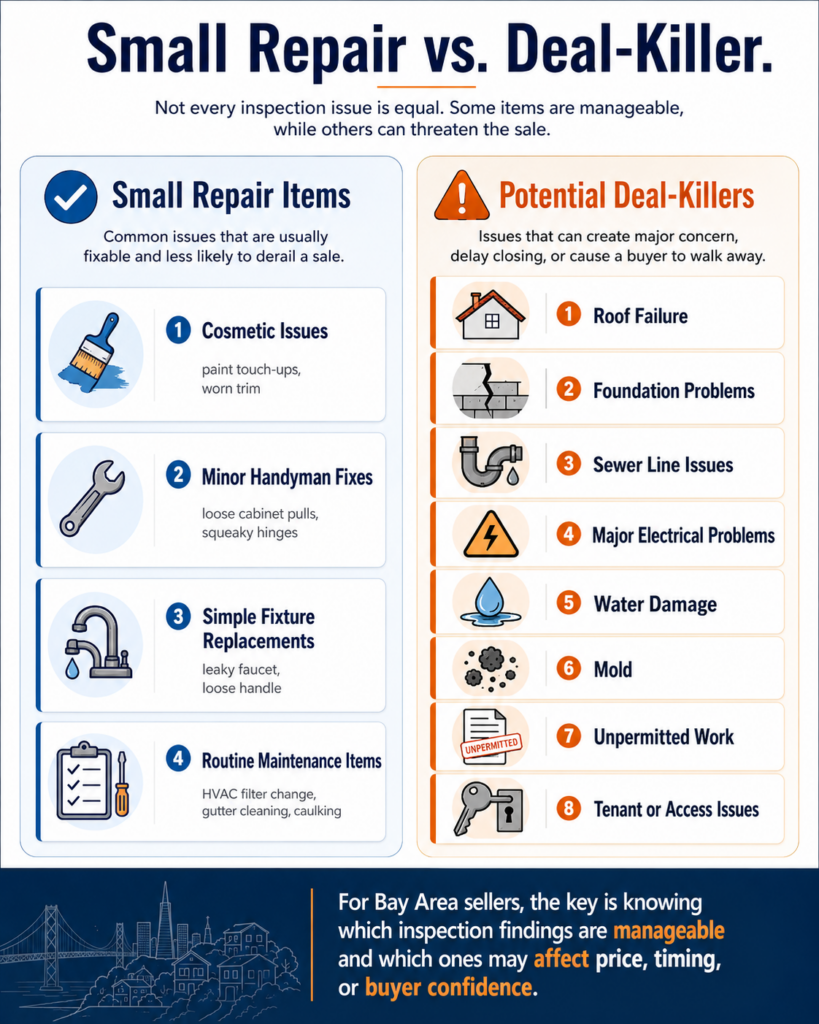
A lot of sellers say, “The buyer backed out because of the inspection.”
That may be true, but it may not be the full story.
The inspection may have revealed a repair issue. But the real reason the buyer canceled could be:
- the repair cost was higher than expected
- the buyer wanted a credit the seller could not give
- the buyer’s lender had concerns
- the appraisal created questions
- the insurance company had concerns
- the buyer got overwhelmed
- the buyer realized the property was too much work
- the buyer no longer trusted the numbers
- the buyer wrote a high offer before understanding the repair risk
That does not always mean the buyer was dishonest.
Sometimes the buyer simply did not understand the full condition of the house when they made the offer.
Before relisting, ask:
- What exact issue made the buyer cancel?
- Was it repair cost, safety, financing, appraisal, insurance, timing, or buyer confidence?
- What did the buyer ask for before canceling?
- Will the next buyer likely notice the same issue?
- Can the issue be repaired, priced in, credited, disclosed, or handled by a different buyer type?
- Is the house still likely to close with a traditional financed buyer?
That is where the next decision starts.
The Real Decision After a Failed Escrow
After a failed escrow, the seller is not just choosing between relisting and selling as-is.
The seller is choosing between:
- price
- time
- certainty
- repairs
- holding costs
- buyer confidence
- financing risk
- disclosure concerns
- another possible cancellation
- emotional pressure from family or other decision makers
That is why the highest offer on paper is not always the safest offer.
A high offer does not help if the buyer cannot close.
A lower offer from a buyer who understands the property condition, has the funds to close, and is comfortable with the repair risk may be stronger than a higher offer that falls apart after inspection.
The question is not only:
“How much is the offer?”
The better question is:
“What is the real chance this offer closes?”
Do Not Rush Back Onto the Market Without a Plan
When a house goes pending and then comes back on the market, buyers notice.
They may ask:
- Why did the first buyer cancel?
- Did the inspection reveal something serious?
- Is there a major repair issue?
- Could the house have trouble with financing?
- Is the price still realistic?
- Will the same issue come up again?
That does not mean the house cannot sell.
It means the seller needs to be prepared.
If the issue was small, the house may go back on the market and move forward with another buyer.
If the issue was serious, relisting without a plan may lead to the same problem again.
This is where Bay Area sellers can lose time. They relist, get another buyer, open escrow again, and then the next buyer reacts to the same roof, sewer, foundation, plumbing, electrical, mold, dry rot, tenant, or permit issue.
Another 30 to 60 days can mean more mortgage payments, property taxes, insurance, utilities, family pressure, tenant problems, and uncertainty.
The goal is not to pretend the first escrow never happened.
The goal is to make the next move smarter.
Before You Relist, Ask These Questions
Before putting the house back on the market, ask:
- Did the buyer cancel because of repairs, fear, financing, appraisal, insurance, or timing?
- Will the next buyer likely see the same issue?
- Could the house have trouble with traditional buyer financing, depending on the loan type, lender, appraisal, insurance, and property condition?
- Would repairs increase your net, or just cost more time and money?
- Can you afford another 30 to 60 days if the next buyer also cancels?
- Do you have enough equity to offer a credit or reduce the price?
- Is the property better suited for a retail buyer, investor, contractor, or as-is buyer?
- Are there tenants, access problems, title issues, family issues, or repair issues that make a traditional sale harder?
- Do you need the highest possible price, or do you need certainty and speed?
- Are you prepared to handle known issues properly before going back on the market?
These questions matter because a failed escrow is not just a delay.
It is a warning sign that something in the deal needs to be understood before the next offer.
How to Keep the Next Escrow From Falling Apart
If your Bay Area house already fell out of escrow after inspection, the next goal is to find a buyer who understands the condition before getting too far into the deal.
If the first buyer canceled because of the roof, plumbing, electrical system, foundation, sewer line, water damage, dry rot, unpermitted work, tenant access, or another major issue, do not treat that as a surprise anymore.
That issue is now part of the selling strategy.
Before accepting another offer, ask:
- Does this buyer understand the repair issue?
- Has the buyer seen the areas that caused concern the first time?
- Is the buyer using financing that may be affected by the condition?
- Does the buyer have enough cash to handle repairs after closing?
- Is the buyer likely to ask for another large credit after inspection?
- Has the buyer closed on repair-heavy properties before?
- Is the buyer comfortable with the timeline, access, tenants, cleanup, or repairs?
If the buyer provided written repair requests, cancellation reasons, inspection notes, estimates, or other documents, do not ignore them.
Review them with your agent, broker, attorney, or another qualified professional before relisting or accepting another offer.
The next escrow should be more realistic than the first one.
A Bay Area House With Repairs Can Still Sell, But the Buyer Type Matters
A Bay Area house with repairs can still sell.
The issue is matching the house with the right buyer.
A retail buyer usually wants confidence. They may want a clean inspection period, normal appraisal, comfortable financing, and fewer surprises.
A first-time buyer may like the house during the showing, then get overwhelmed when repair issues become clearer.
A financed buyer may still need the lender, appraiser, and insurance company to be comfortable with the property, depending on the loan type and condition.
An investor or contractor-type buyer may be more comfortable with repair risk because they already expect repairs and know how to price the work.
That is why the buyer type matters.
The worse the condition, the smaller the buyer pool may become.
That does not mean the house is worthless.
It means the seller’s expectations need to match the actual condition of the house.
The question is not just:
“Can I sell this house?”
The better question is:
“Who is the right buyer for this condition?”
Common Bay Area Repair Issues That Can Scare Buyers
Every property is different, but some issues commonly create problems after inspection.
Roof Problems
An old roof can scare buyers because roof work is expensive. Buyers may worry about leaks, dry rot, insurance, lender concerns, or future replacement cost.
Plumbing or Sewer Issues
Plumbing problems can raise questions about leaks, water damage, mold, old pipes, sewer lines, and hidden repairs. In older Bay Area homes, plumbing issues can become expensive fast.
Electrical Issues
Old panels, outdated wiring, exposed wiring, overloaded circuits, or questionable work can create safety concerns. Buyers may ask for an electrician or worry about insurance and future repair costs.
Foundation or Structural Concerns
Foundation issues can make buyers nervous because they may lead to engineer reports, sloping floors, drainage work, and large repair estimates.
Water Damage or Mold Concerns
Water damage creates uncertainty. Buyers may worry about hidden damage, health concerns, repair scope, and whether the problem will return.
Unpermitted or Questionable Work
Garage conversions, added bathrooms, downstairs living spaces, enclosed porches, extra kitchens, or additions that do not match records can raise questions during inspection, appraisal, resale planning, or buyer review.
Sometimes the seller did not do the work. Maybe a prior owner did it. Maybe the family used the space that way for years. But once the sale starts, those questions can matter.
This can be especially common in older Bay Area homes where families changed the property over time to make it work for their needs.
Tenant or Access Problems
Tenant-occupied properties can make inspections and repairs harder. If the buyer cannot fully inspect the property, or if access is difficult, the buyer may feel like there is too much unknown risk.
Real Bay Area Examples That Can Change a Deal
A seller may think the only issue is an old roof. But once the buyer’s inspector sees roof wear, dry rot, attic moisture, and possible insurance concerns, the buyer may no longer see it as one repair. They may see it as a bigger risk.
An older Oakland or Richmond home may have a mix of old plumbing, electrical issues, dry rot, and deferred maintenance. One repair can uncover another.
A Daly City, San Francisco, or East Bay property may have a downstairs living area, garage conversion, extra kitchen, or added bathroom that raises permit questions.
A tenant-occupied rental may be hard to inspect fully. If the buyer cannot access parts of the property, they may assume there is more risk.
An inherited San Mateo County or Santa Clara County property may have family members who disagree about whether to repair, relist, or sell as-is.
These are the kinds of real issues that can turn a strong offer into a failed escrow.
Bay Area Repair Costs Can Make the Decision Harder
Repair issues are not the same in every market.
In the Bay Area and Northern California, repairs can be expensive. Labor, materials, permits, contractors, hauling, and holding costs can add up quickly.
Older homes in places like Oakland, Richmond, Vallejo, Daly City, Hayward, Fremont, San Jose, San Mateo, Concord, and the East Bay may have layers of deferred maintenance.
One issue can lead to another.
A plumbing issue may uncover water damage.
A roof issue may reveal dry rot.
An electrical repair may turn into a panel upgrade.
A foundation concern may lead to drainage work or engineering.
A garage conversion may lead to permit questions.
A tenant-occupied house may make access and repairs harder.
Sometimes the issue is not whether the house can be fixed.
The issue is who is going to pay for it, how long it will take, and whether the deal can survive the delay.
Why the Highest Offer May Not Be the Safest Offer
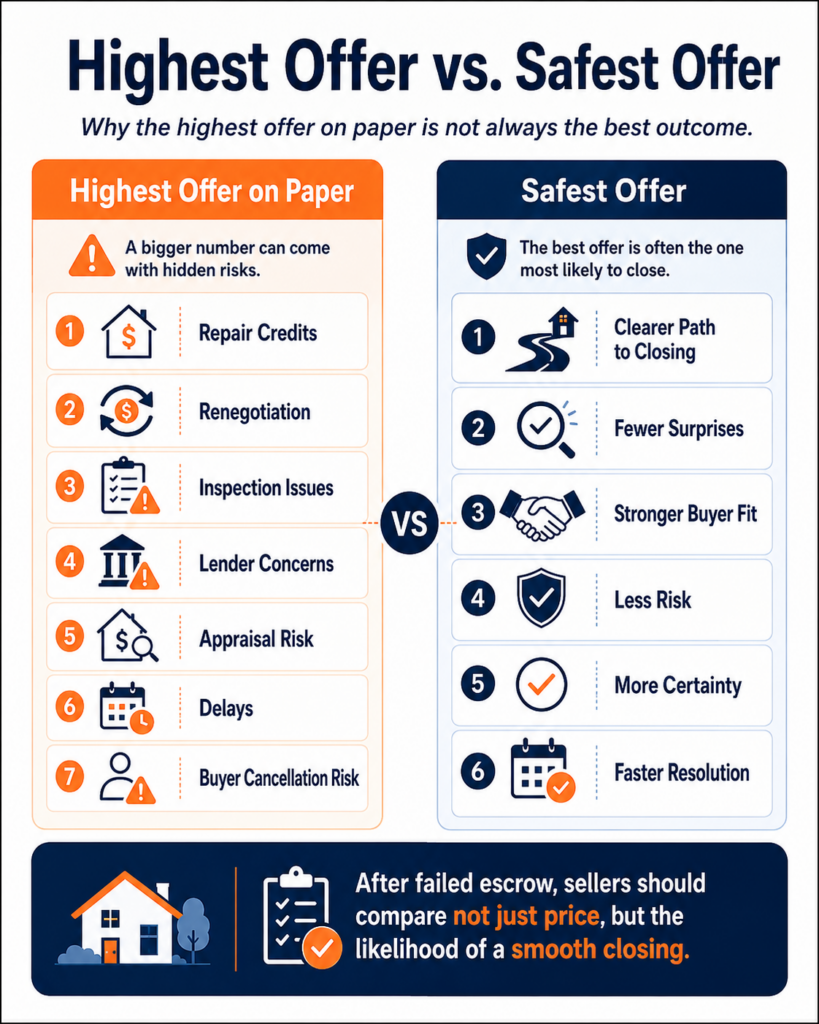
It is natural for sellers to focus on the highest number.
That is not wrong.
Most sellers want the best possible price, and a good agent should help the seller understand what the open market may bring.
But the highest offer can be fragile if the buyer does not understand the property condition before escrow.
A buyer can write a high offer and still fail to close.
That can happen when the buyer does not understand the repair risk before making the offer. Once repair issues come up, their confidence, financing, appraisal, insurance, or timeline may change.
A seller should look beyond price and ask:
- Is the buyer using financing or paying cash?
- Does the buyer understand the repair risk?
- Has the buyer closed on repair-heavy properties before?
- Is the buyer likely to ask for a large credit?
- Is the buyer depending on appraisal approval?
- Does the buyer have proof of funds?
- Can the buyer still close if the condition concerns are serious?
A high offer does not help if it falls apart.
Sometimes the strongest offer is not the highest number.
It is the offer with the clearest path to closing.
Why Repair Credits Do Not Always Solve the Problem
A lot of sellers think, “We can just give the buyer a credit.”
Sometimes that works.
A repair credit can help when the issue is mostly about price.
But a credit does not always solve the real problem.
A credit may not solve the problem if:
- the lender requires repairs before closing
- the buyer does not have enough cash to complete repairs after closing
- the repair cost is bigger than expected
- the buyer loses confidence after the inspection period
- the seller does not have enough equity to give a large credit
- the buyer and seller disagree on the repair amount
- the insurance company still has concerns
- the buyer no longer wants to take on the project
A credit can fix a price problem.
It does not always fix a confidence problem.
It does not always fix a financing problem.
It does not always fix a buyer who no longer wants the risk.
Before offering a credit, understand what problem you are actually trying to solve.
What If Financing, Appraisal, or Insurance Becomes the Problem?
If the buyer is using financing, the buyer is not the only person who matters.
The lender, appraiser, and sometimes the insurance company may also have concerns.
Not every repair issue will stop a closing. It depends on the property, buyer, loan type, lender, appraiser, insurance requirements, and what repairs are being discussed.
But some condition issues can create questions or delays.
Examples may include:
- major safety issues
- exposed wiring
- serious roof problems
- broken windows
- major water damage
- foundation concerns
- missing or non-working major systems
- incomplete or unsafe areas
- code or permit questions
- property conditions that may affect insurance
This does not mean every damaged house cannot be financed.
Some damaged houses still close with traditional buyers. Some repairs can be negotiated. Some buyers use different loan products. Some issues are manageable.
But sellers should not assume every buyer, lender, appraiser, or loan type will treat the property the same way.
A buyer may love the house, but if the financing does not work, the deal can still fall apart.
If the House May Have Financing Issues, Get a Backup Plan
If the inspection issue could affect financing, appraisal, insurance, or buyer confidence, a backup cash offer can help you compare your options.
It does not mean you have to sell.
It gives you another path if relisting or going back into escrow becomes too risky.
[INSERT CTA BUTTON: Compare My Options]
Look at the Net, Not Just the Offer Price
The first offer number is not the whole story.
What matters is what the seller actually walks away with after repairs, credits, delays, and risk.
The net can be affected by:
- repair credits
- price reductions
- contractor estimates
- closing delays
- extra mortgage payments
- property taxes
- insurance
- utilities
- cleanup costs
- relisting time
- second inspections
- another buyer canceling
- agent commissions
- holding costs while waiting for another buyer
A higher offer that turns into months of delays, credits, stress, and another cancellation may not be better than a lower offer with a clearer path to closing.
That does not mean sellers should always take the lower offer.
It means sellers should compare the real net, not just the top-line number.
The better question is:
“What will I actually walk away with if this takes longer, gets renegotiated, or falls apart again?”
That is the number that matters.
What Sellers Should Understand About Disclosure After a Failed Escrow
Selling as-is does not mean hiding known issues.
If a problem came up during escrow, do not pretend it never happened.
In California, sellers are generally expected to disclose known material property issues. If you are unsure what must be disclosed after a failed escrow, talk with your agent, broker, attorney, or another qualified professional before relisting or accepting another offer.
This is not legal advice.
It is a practical warning.
If the buyer provided written repair requests, cancellation reasons, inspection notes, contractor estimates, or other documents, ask the right professional how those issues should be handled.
If you relist, be prepared.
If you sell as-is, be clear about known issues.
Trying to ignore problems usually creates bigger problems later.
For sellers who want to understand the bigger disclosure picture, the California Department of Real Estate provides California real estate disclosure guidance that explains common disclosure issues in residential transactions.
When Listing May Still Make Sense
Selling directly to Twin Home Buyer is not always the best answer.
Sometimes listing still makes sense.
Listing may make sense if:
- the house is damaged but still financeable
- the seller has time
- the seller can handle more showings and inspections
- the seller can afford repairs or credits
- the seller is willing to relist and negotiate again
- the market has strong buyer demand
- the seller wants the highest possible retail price
- the property condition is not severe enough to scare most buyers
- the seller has good guidance from a local real estate agent
If listing will likely get the seller more money, and the seller has the time, patience, and ability to go through the process, that may be the right move.
The right answer depends on the situation.
When Repairing Before Relisting May Make Sense
Sometimes repairs before relisting are smart.
Repairs may make sense if:
- the repair is clear and manageable
- the seller has the cash to do the work
- the repair will likely increase the net
- the repair removes a major buyer concern
- the seller has time to manage contractors
- the market will reward the repair
- the repair helps the house qualify for more buyers
But repairs do not always make sense.
Repairs may not make sense if:
- the cost is too high
- the work may uncover more problems
- the seller needs speed
- the seller cannot manage contractors
- the house has multiple major issues
- the seller may not recover the repair cost
- the delay creates more holding costs
- there are tenants or access problems
- family members are not aligned
Do not repair just because one buyer complained.
Repair only if it helps the net, timeline, or ability to close.
When Selling As-Is May Make More Sense
Selling as-is may make more sense when repair risk, timing, privacy, or certainty matters more than chasing another uncertain escrow.
An as-is sale may make sense if:
- the house has serious repairs
- the property already fell out of escrow
- the seller does not want to clean, repair, or prepare the house
- the seller needs speed or certainty
- the seller wants privacy
- the property may have trouble with traditional buyer financing
- the seller does not want more inspections or repair negotiations
- the seller inherited the house and does not want to manage the project
- the seller is dealing with tenants, family issues, title issues, or money pressure
- the seller does not want to risk another buyer backing out
A cash sale is not always the highest price.
But in the right situation, it may be cleaner, faster, and less stressful because the buyer is taking on the repair risk.
The best option depends on what matters most:
- highest possible price
- speed
- certainty
- privacy
- less work
- fewer delays
- less risk of another failed escrow
That is the real decision.
Why a Backup Cash Offer Can Help After a Failed Escrow
A backup cash offer does not force you to sell.
It gives you a second option.
After a failed escrow, a backup cash offer can help you:
- compare relisting versus selling as-is
- understand what the property may be worth without repairs
- avoid guessing what another buyer may do
- reduce the risk of another failed escrow
- create a fallback plan if the next traditional buyer does not work
- decide whether speed, certainty, or top price matters most
For some Bay Area sellers, relisting is still the right move.
For others, a backup cash offer gives them clarity. It shows what they could do if they do not want to keep dealing with inspections, repair negotiations, lender concerns, tenant access, repair credits, or another buyer backing out.
The value of a backup offer is not pressure.
The value is having another path.
What Twin Home Buyer Looks At Before Making an As-Is Offer
Twin Home Buyer does not look at a house only as an address.
We look at the whole situation.
That includes:
- property condition
- repair scope
- location
- access to the property
- whether the house is vacant or occupied
- tenant issues
- title or ownership questions
- seller timeline
- cleanup needed
- holding costs
- resale or renovation risk
- why the previous escrow failed
- whether the issue was repairs, appraisal, financing, insurance, or buyer confidence
- what solution actually makes sense for the seller
Sometimes selling directly makes sense.
Sometimes listing with an agent makes sense.
Sometimes fixing the property first may make sense.
Sometimes the seller needs to talk to an attorney, title company, lender, contractor, or agent before making a decision.
The goal is not to force every seller into a cash offer.
The goal is to understand the property, the problem, the timeline, and the numbers so the seller can make a better decision.
Get a Backup Cash Offer for Your Bay Area House
If your Bay Area house fell out of escrow after inspection, the next step is not always to rush back onto the market.
First, understand why the deal failed.
Was it repair cost? Financing? Appraisal? Insurance? Buyer confidence? A large credit request? A problem with the property condition? A timeline issue?
If the same issue is still there, the next buyer may see the same problem.
Twin Home Buyer can review the situation and help you understand your options. If listing still makes sense, we will tell you. If selling as-is is a better fit, we can explain what that would look like and give you a backup cash offer.
You do not need to have everything figured out.
Just tell us what happened during escrow, what concerns came up, and what you are trying to do next.
Tell Us What Happened in Escrow
Prefer to talk first?
Call or text Twin Home Buyer at (415)-415-TWIN.
You can also visit www.twinhomebuyer.com to request an offer online.
FAQ: Bay Area House Fell Out of Escrow After Inspection
Can a Bay Area house fall out of escrow after inspection?
Yes. A Bay Area house can fall out of escrow after inspection if the buyer discovers repair issues, safety concerns, major deferred maintenance, or unexpected costs. The buyer may ask for repairs, ask for a credit, renegotiate, delay closing, or cancel if they are still within their contingency period.
What should I do if my buyer backed out after inspection?
Start by finding out why the buyer canceled. Look at the inspection findings, repair requests, or objections raised during escrow. Then decide whether to repair, reduce the price, relist, offer a credit, look for a different buyer type, or consider selling as-is.
What happens if a buyer backs out after inspection in California?
It depends on the contract, contingency period, cancellation documents, and specific facts of the sale. Talk with your agent, broker, escrow officer, or attorney so you understand your options before relisting or accepting another offer.
Does a bad inspection mean I cannot sell my house?
No. A bad inspection does not mean the house cannot sell. It means the seller may need the right buyer, the right price, the right disclosures, and a realistic plan for the property’s condition.
Should I relist immediately after a buyer backs out?
Not always. Before relisting, understand why the buyer backed out. If the same repair, financing, appraisal, insurance, or buyer-confidence issue still exists, the next buyer may have the same concern.
How do I keep the next buyer from backing out too?
You cannot control every buyer, but you can reduce surprises. Understand why the first escrow failed, prepare for the known repair issue, screen the next buyer more carefully, and make sure the next buyer understands the property condition before getting too far into escrow.
Can a repair credit fix inspection problems?
Sometimes. A repair credit can help with price negotiations, but it does not always solve lender concerns, insurance concerns, buyer fear, or major repair risk.
Can I sell a damaged house as-is in the Bay Area?
Yes, many damaged Bay Area houses can be sold as-is. But selling as-is does not mean hiding known issues. Sellers should be honest about known problems and get professional guidance when needed.
Is the highest offer always the best offer?
No. The highest offer is not always the safest offer. A lower offer from a buyer who understands the repair risk and can close may be better than a higher offer that falls apart after inspection, appraisal, financing, or repair negotiations.
Why would a backup cash offer help after failed escrow?
A backup cash offer helps you compare options. You can see what an as-is sale may look like versus relisting, repairing, reducing the price, or risking another escrow. It does not force you to sell. It gives you another path.
What Our Clients Say
⭐ Trusted by Homeowners Everywhere
We’re proud that 92% of our customers rate their experience with us as excellent.
Rafael P.

Stress free process, paid all the closing costs and didn’t have to do any cleaning or repairs. Juan Diaz and team are men of their word. Very professional and respectful. The escrow process was a piece of cake. The best part is they close faster than any realtor listing the house ever could. If you’re looking for a no hassle way to sell your house quickly then I definitely recommend Twin home buyer and team.
Robert R.
I can’t speak highly enough about Juan Diaz and his team at Twin Home Buyer. I'm truly honored to be able to work with them and learn from them. Their professionalism, knowledge, honesty, integrity, and hard work ethics are very much admired and respected. They are highly experienced, detail oriented, honest, and truly care about their clients' needs. They deliver on their promises and go above and beyond to get the job done. I look forward to continuing to work with them. I recommend them 100%!
Edgar R.
Called Twin Home Buyer with questions about my property. They listened, offered honest advice, and followed up just like they said they would. Super kind and no pressure. I haven’t sold yet, but I’d definitely recommend giving them a call. Great people!
Jose J.
The twin home buyer was awesome to deal with although they did not buy my house. They recommended me over to an amazing realtor that was able to get top dollar for my property. They let me know upfront that it was not the right match that they could not help me, but it didn’t stop there this company generally cares
Gabriela G.
I've had the opportunity to work with Twin Home Buyer on a few occasions. And everytime has been a great experience. They do excellent work! Juan Diaz is Honest, trustworthy and very easy to work with. I always recommend him to my clients when they want a cash, quick close. I look forward to keep working with them in the future.
Tewfik H
I met with Juan Diaz on Saturday April 2nd and after showing him my property we sat down and discussed price. We finally agreed on a price that was not far off my asking. I felt strongly that Juan was genuine. He sent me a sale and purchase agreement that afternoon. I reviewed and had an advisor from HomeLight review it. The advisor said it was a "good agreement" and that it was "solid". I proceeded with the agreement on April 4th with up to 60 days to close. I may close sooner if I wish. Before meeting Juan I was dealing with two RE agents. One was great bit she overpromised the selling price, even when I presented her with contradictory comps. The other RE agent was pushy and persistent. Both agents wanted me to pour more money into the property. I felt that repairs and improvements were constantly draining my energy. What Juan gave me was a solution to my endless repairs and freedom from dealing with agents. He also alleviated my concerns by offering an Earnest Money Deposit of $50K. That's more than the standard $19.5K. He will also pay all the closing costs. All I would be responsible for is paying off the loan. I was almost immediately notified by the Title Company that the money was in Escrow. To sweeten the deal he also offered to have his guys move our stuff. I told him that I did not expect that but I definitely welcome it. Today someone dropped off 10 heavy duty boxes as I had requested. What more, there's is no need to clear out all of the junk that we accumulated over the years. That's a big help along with the 60 days. Moving is a stressful period in life and Juan made it that much easier. Now I will sit back and wait for an opportunity to buy again.
Tewfik H
Twin Home Buyer made selling my house simple and hassle-free. Their offer was fair, and they handled everything efficiently. I couldn’t have asked for a smoother experience!..
Abbas M.
Very seamless and professional. They do exactly what they say they would do. We work with a lot of sellers and I continue to refer to Juan and team for those who want to sell quickly and with the least hassle.
Suzanne P.
I had the pleasure of being contacted by one of the team members with Twin Homes. She was very pleasant to speak with and asked me to assist with the sale of one of their homes. She was prompt and available when I needed her. I later spoke with Juan Diaz who exemplified the values I stand for as a real estate professional. I have had such pleasant interactions with the entire team that I would always pick up the phone for them. If you have the opportunity to work on the buy or sale side I am sure you will be surprised with the communication and attention to detail they show. They have done the big and little things very well.
Gabriela G.
I've had the opportunity to work with Twin Home Buyer on a few occasions. And everytime has been a great experience. They do excellent work! Juan Diaz is Honest, trustworthy and very easy to work with. I always recommend him to my clients when they want a cash, quick close. I look forward to keep working with them in the future.
Bianca C.
What sets Twin Home Buyer apart is their personalized approach to customer service. The team took the time to understand my unique needs and provided tailored support and guidance every step of the way, ensuring a seamless selling experience. Overall, I couldn't be more satisfied with my experience with Twin Home Buyer. If you're considering selling your home and want a hassle-free, fair, and transparent process, I highly recommend reaching out to Twin Home Buyer.
