
Bay Area Real Estate: Lowball Offer or Fair Market Value?
As homeowners in San Francisco, San Jose, Oakland, and Palo Alto navigate a cooling 2026 market—with rising inventory and mortgage rates near 6.2%—knowing what counts as a "lowball" is crucial. At Twin Home Buyer, we’ve helped 1,000+ families since 2000 evaluate these exact numbers.
Many sellers react emotionally to an offer before breaking down what the buyer is actually pricing in. A number that feels insulting at first glance may be tied to repairs, market time, location-specific buyer demand, layout concerns, financing risk, or the cost of carrying the property during a long traditional sale. On the other hand, some offers are genuinely designed to take advantage of urgency and uncertainty. The key is learning how to tell the difference.
What Is a Lowball Offer?
A lowball is an intentionally underpriced bid meant to test your urgency. Typically, this is 20–30% below fair market value without solid justification.
- No comparable sales (comps) to support the price.
- Lopsided contingencies (demanding credits without inspection).
- High-pressure "take it or leave it" deadlines.
Pro Tip: If an offer is 10–15% below valuation, investigate the "why." With real condition issues, that discount may actually be a fair reflection of the market—not a lowball.
Why Sellers Misread Offers
One of the biggest mistakes homeowners make is comparing an offer to the highest number they have seen online instead of the most realistic number the market would support today. Automated estimates can be helpful for a rough range, but they do not always account for deferred maintenance, outdated interiors, lot issues, access problems, tenant complications, or the difference between an ideal retail sale and a direct as-is purchase.
That is why fair market value and investor pricing are not the same thing. Retail value assumes a broader buyer pool, more preparation, more time on market, and often a home that shows well. A direct cash offer reflects speed, convenience, reduced selling friction, and the cost the buyer takes on after closing. Understanding which pricing model you are actually comparing is where smarter decisions start.
Factors That Influence Your Offer Price
Square footage sets the baseline, but Layout Efficiency often swings value by 5–10%. Open floor plans and single-level living attract broader buyer pools, while "chopped-up" spaces can depress value even if total SF is high.
Condition also matters more than many sellers expect. Two homes with the same square footage in the same zip code can trade at very different numbers based on roof age, kitchen updates, foundation history, drainage, windows, flooring, curb appeal, and permit quality. Buyers are not only paying for space. They are paying for how much work they think they will need to do after closing.
Location inside the location matters too. Even within the same city, values change depending on school district, traffic exposure, walkability, hillside position, lot usability, and block-by-block desirability. That is why serious offer analysis should not stop at city-wide median pricing alone.
What Buyers Look at Before Making an Offer
Most buyers—whether retail buyers, cash buyers, or investors—start with the same broad question: what will this property realistically be worth after all known issues, risks, and holding costs are factored in? From there, they evaluate repair scope, resale demand, financing risk, time to close, and how much uncertainty the home brings into the deal.
Retail buyers usually focus on monthly payment, move-in readiness, inspection comfort, and whether the home compares well to nearby active listings. Investors and direct buyers look more closely at renovation cost, exit value, permitting exposure, and the margin needed to take on the risk of buying the property in its current state. That does not automatically make an investor offer unfair. It just means the logic behind it is different.
When an Offer Below Asking Price Is Still Fair
Not every below-asking offer is a lowball. In fact, many reasonable offers come in below list price when the property has visible repair needs, an ambitious listing strategy, limited buyer demand, or a longer expected time on market. A fair offer is one that can be explained clearly using real numbers, real condition issues, and real market evidence.
For example, if a home needs significant exterior work, has outdated systems, carries tenant complications, or sits in a slower-moving pocket of the Bay Area, a lower offer may simply reflect what buyers see as the true cost of solving those problems. Sellers are in a stronger position when they focus less on emotion and more on whether the math holds up.
How to Measure Fair Market Value More Accurately
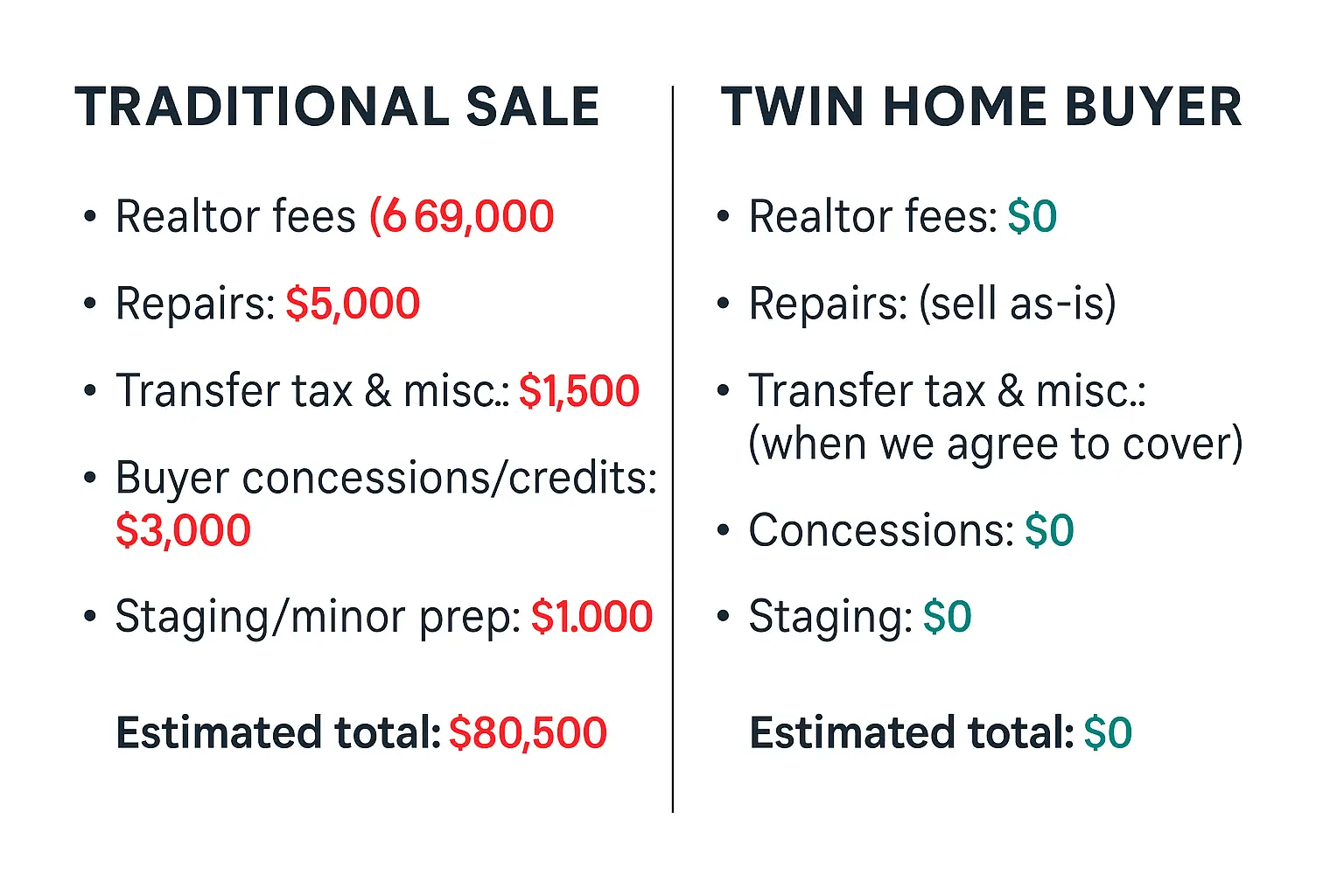
The most useful way to assess your offer is to compare it against recent nearby sales, current competing inventory, condition-adjusted pricing, and the estimated cost of getting the home market-ready. If your plan is a traditional listing, you should also consider commissions, holding costs, inspection credits, cleaning, staging, and the possibility of a financed buyer falling out of escrow.
If your plan is a direct sale, compare the offer against the convenience you are receiving in return. Are you skipping repairs? Avoiding months of prep? Selling without showings? Eliminating financing uncertainty? Saving on carrying costs? These factors have real value, especially for sellers dealing with inherited property, divorce, relocation, major repairs, or timeline pressure.
2026 Selling Tips for Bay Area Homeowners
- Monitor Local Trends: Track inventory levels and Days on Market (DOM) in your specific zip code.
- Prepare Smartly: Light decluttering and pre-inspections reduce buyer friction.
- Negotiate with Data: Use recent comps and repair estimates to beat emotion-based offers.
- Consider Cash: When speed and certainty are the priority, a cash exit removes the financing hurdle.
Another smart move is to separate your ideal outcome from your practical outcome. A seller may hope for top-of-market pricing, but if the home needs work and the timeline is tight, the better result may come from a clean, dependable sale rather than holding out for an offer that never closes. Good selling strategy is not only about price. It is also about certainty, timing, and total net result.
Should You Repair the Home or Sell As-Is?
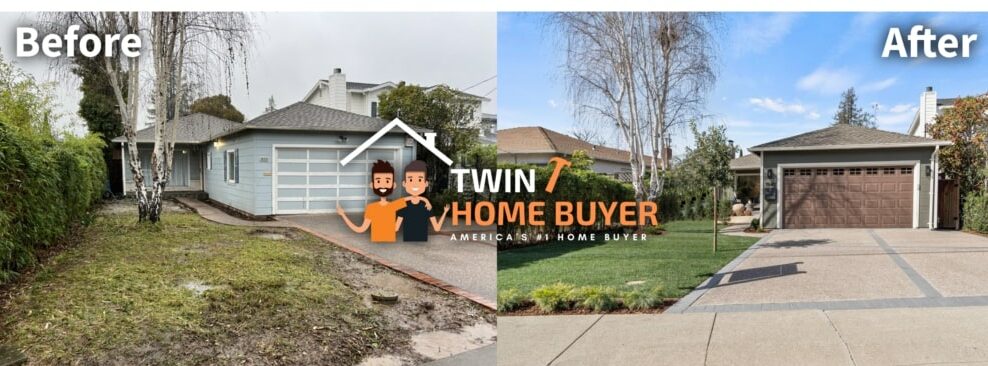
This question matters because repairs change the kind of buyer you attract. A fully updated home may open the door to retail buyers willing to pay more, but repairs also cost time, labor, money, and energy. If the home needs multiple improvements at once, the real question becomes whether the expected price increase will outweigh the cost and stress of getting there.
For many Bay Area homeowners, especially those facing inherited property decisions, landlord fatigue, or major deferred maintenance, an as-is sale is less about taking a discount and more about choosing a simpler path. When you remove contractor coordination, permit surprises, inspection negotiations, and financing uncertainty, the value of certainty becomes easier to see.
When a Cash Offer Makes Strategic Sense
A cash offer often makes the most sense when the seller values speed, simplicity, and control. This can be true even in expensive markets. Homes with repairs, outdated layouts, difficult tenants, probate complications, title concerns, or long-neglected maintenance often perform very differently in the open market than sellers initially expect.
In those cases, a strong direct buyer can offer something that does not show up on a listing sheet: fewer moving parts. No open houses, no repeated cleanups, no waiting on lender approvals, and no prolonged guessing about whether the buyer will stay committed through closing. For the right seller, that is not a compromise. It is the advantage.
How to Respond to an Offer Without Guessing
If you receive an offer that feels too low, do not reject it purely on instinct. Ask what comps the buyer used, what repairs they are pricing in, how they view the current market in your area, and whether the offer reflects an as-is purchase or a retail-ready assumption. A serious buyer should be able to explain their number in plain language.
This step matters because the right counterstrategy depends on the reason behind the price. If the buyer is unsupported and opportunistic, that is one thing. If the buyer is using real data tied to condition and marketability, that is another. Sellers who slow down and ask for the reasoning behind the number often avoid emotional decisions that cost them more later.
Final Thought: Look at the Net, Not Just the Number
The smartest way to judge any offer is to ask what you actually keep after repairs, commissions, credits, holding costs, and time are all included. A higher paper price does not always mean a better result. In many Bay Area transactions, the better outcome comes from understanding the full picture instead of reacting to the headline number alone.
If you are trying to decide whether an offer is a lowball or a fair reflection of today’s market, start with the facts: comps, condition, selling costs, market timing, and your own priorities. Once you do that, the answer usually becomes much clearer.
