Oakland homeowners dealing with unpermitted work, stop notices, nuisance complaints, or old correction lists often feel trapped between expensive repairs and an urgent need to move on. This guide explains how Oakland code violations can escalate in 2026, what options owners still have, and why waiting too long can put both equity and negotiating power at risk.
Twin Home Buyer has spent years talking with East Bay owners facing permit problems, deferred maintenance, inherited properties, tenant damage, and city pressure. In many of these situations, the real problem is not just the violation itself. It is the combination of deadlines, inspection uncertainty, contractor pricing, legal notices, and the fear that a sale will fall apart once disclosures and title issues are fully examined.
If you are trying to understand what happens after a notice arrives, how liens can affect a future closing, or whether selling as-is is still possible, the most important first step is knowing the practical timeline. Code violations rarely feel urgent at the start. They become urgent when fees stack up, correction deadlines pass, and an owner realizes the property now needs both compliance work and a clean exit strategy.
How Oakland Code Violations Work in 2026
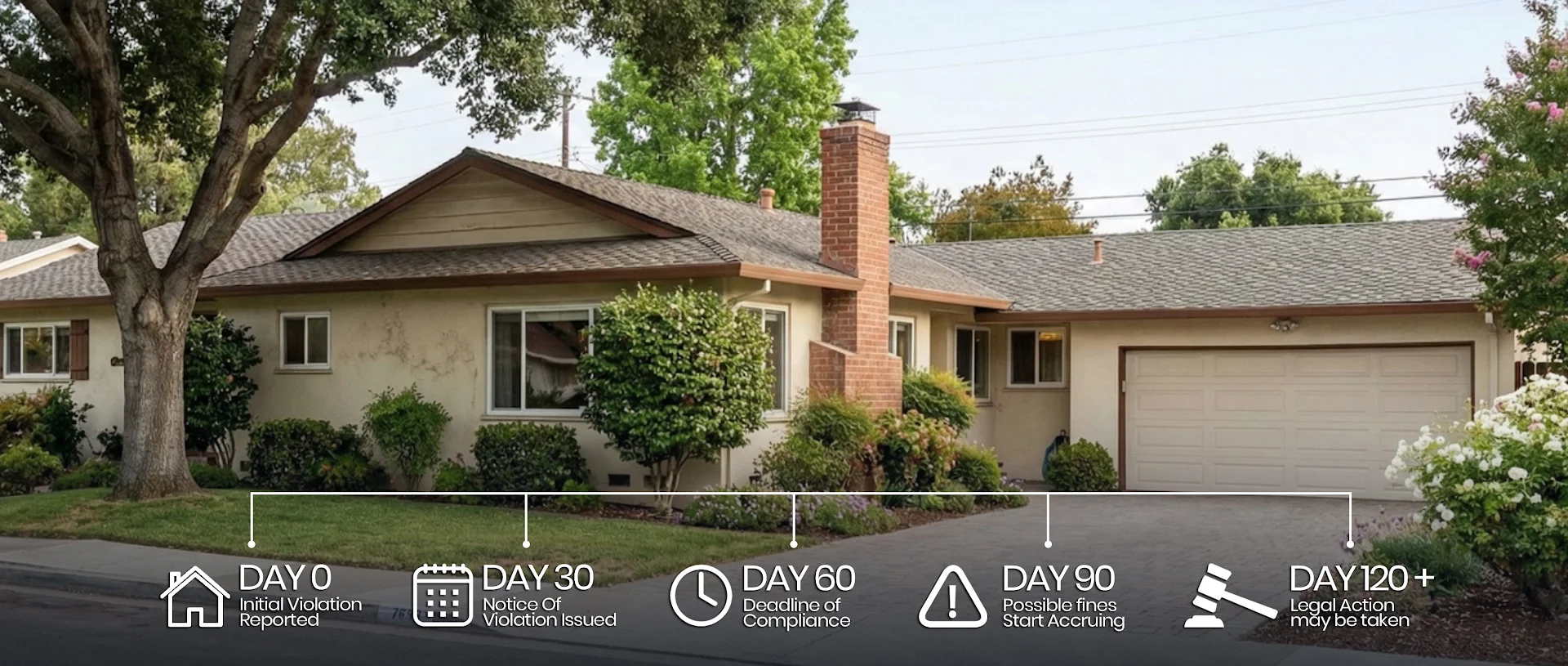
Oakland typically uses a progressive enforcement model rather than jumping immediately to the harshest penalty. That means many cases begin with a warning, a correction request, or a formal notice that gives the owner time to respond. The problem is that many homeowners underestimate how quickly a manageable issue can grow into a more expensive one once inspections, administrative fees, repeat notices, or contractor coordination enter the picture.
For owners with unpermitted additions, garage conversions, illegal units, rough electrical work, plumbing changes, exterior deterioration, unsafe stairs, or nuisance conditions, the city process often creates pressure from two directions at once. On one side, there is the compliance requirement. On the other, there is the property decision itself: repair, legalize, refinance, list traditionally, or sell directly before the burden gets heavier.
1. Courtesy Notice & NOV
Minor issues often start with a courtesy communication or a short self-correction window. If the city believes the condition remains unresolved, it may issue a formal Notice of Violation that starts a much more serious compliance period. At that point, the owner usually needs more than good intentions. They need a plan, documentation, and in many cases a realistic budget.
2. Escalation, Reinspection & Fees
When deadlines are missed or work is only partially completed, cases can move into reinspection cycles and added administrative charges. This is where owners often lose time. They may be waiting on contractors, permits, engineering, or tenant access while the file stays active and the total cost of resolution keeps rising in the background.
3. Lien Risk & Title Complications
If the matter remains unresolved, the city can take stronger action that affects title. A lien, recorded costs, or unresolved municipal issues can complicate refinancing and scare away traditional buyers. Even when a retail buyer is still interested, their lender, agent, or inspector may force the issue back onto the seller before closing can move forward.
Why Code Violations Feel So Expensive Even Before Major Repairs Begin
Most owners think only about construction cost, but the true burden is broader. A code violation case can create permit fees, plan review fees, cleanup costs, scheduling delays, contractor markups, legal review, storage or relocation costs, and missed opportunities if the owner wanted to sell sooner. In older Oakland housing stock, opening one issue can reveal others behind the walls, under the floor, or in older additions that were never properly legalized in the first place.
This is why many homeowners freeze. They are not ignoring the issue because they do not care. They are overwhelmed because the property now needs time, money, decision-making, and specialist coordination all at once. If the owner is also dealing with probate, divorce, inherited title, a vacant home, or a tenant problem, code violations become one more layer of pressure attached to an already difficult situation.
Two Tools Most Owners Overlook
Compliance Extension Requests
In some situations, owners can ask for more time when they can show credible progress. That may include contractor bids, permit activity, escrow preparation, or proof that corrective work is actively moving. Extensions do not erase the problem, but they can create breathing room and prevent avoidable escalation while the owner decides whether to repair or sell.
Violation Appeals
If a notice appears incorrect, overbroad, or based on incomplete facts, owners may have procedural options to challenge part of the case. That does not mean every notice should be appealed, but it does mean owners should not assume the first version of a violation is the final word. Documentation, timeline records, prior permits, photographs, and qualified review can materially change the outcome in some cases.
What Traditional Buyers Usually Do When They See Open Code Problems
Retail buyers and their agents often respond cautiously when a property has active code issues, unresolved permits, or visible deferred maintenance tied to municipal attention. Even when a buyer still wants the house, the deal often becomes slower and more conditional. Requests for credits rise, timelines extend, and the buyer may ask the seller to resolve part of the problem before closing. If financing is involved, the lender can add another layer of scrutiny.
That is why owners who hoped to just disclose everything and sell normally are sometimes surprised by how much leverage they lose once the problem is in the open. The house may still sell, but not always with the speed, certainty, or pricing assumptions the owner expected at the beginning.
The 4 Real Escape Routes for Sellers
1. Retroactive Permitting & Full Compliance
For owners with time, capital, and a property that still makes sense on the open market after repairs, retroactive permitting can preserve more retail upside. The tradeoff is that the path can be slow, expensive, and operationally demanding. It often requires patience, specialist help, and the willingness to absorb surprises as work progresses.
2. Partial Stabilization Before Listing
Some owners do not fully legalize everything. Instead, they handle safety issues, documentation, cleanup, and enough visible correction to make the property more marketable. This approach can work when the case is limited and the seller still wants a broader buyer pool, but it still carries execution risk and does not always eliminate title or disclosure concerns.
3. Sell As-Is to a Cash Buyer
This is often the fastest path for owners who value speed, certainty, and simplicity over a long repair project. In the right situation, a direct buyer can close in days instead of months and handle permit cleanup, deferred maintenance, junk removal, or lien resolution through the transaction structure. That can be especially valuable when the owner is out of state, managing an inherited property, or simply done carrying the stress.
4. Hold and Reassess With Better Information
Sometimes the right answer is not immediate repair or immediate sale. It is stepping back, understanding the true scope, and comparing the cost of compliance against the likely net result of a traditional sale versus an as-is sale. Homeowners who make the best decisions in these cases usually do not move blindly. They compare timelines, contractor risk, title exposure, and carrying cost before choosing a direction.
When Selling As-Is Makes More Sense Than Fighting the File
An as-is sale tends to make the most sense when the city issue is only part of a larger problem. Maybe the home also needs roof work, foundation work, drainage improvements, electrical cleanup, interior hauling, or tenant resolution. Maybe the owner inherited the property and does not want to learn Oakland permitting under pressure. Maybe the house has already drained enough money and attention. In cases like that, simplicity becomes a real financial value, not just a convenience.
Owners also choose a direct sale when delay itself is expensive. Vacant homes invite more deterioration. Occupied conflict properties become harder to manage. Family decision-making gets harder with time. And many sellers simply do not want to spend the next several months coordinating inspectors, contractors, paperwork, and repeated city follow-up while still not knowing what the final cost will be.
How to Think About Equity Before the Situation Gets Worse
The biggest mistake many owners make is treating the violation as a small paperwork issue until it begins to eat into sale flexibility. Every month of delay can affect carrying costs, repair burden, buyer confidence, and title complexity. Even if you do not sell immediately, understanding your current as-is value can help you decide whether pouring more money into the property still makes sense.
A strong decision starts with clarity: what the city is asking for, what it will likely cost to comply, how long it may take, what a traditional buyer will demand, and what an as-is buyer would do differently. Once those numbers are on the table, the next step usually becomes much easier to see.
Resolve Your Oakland Property Problem Without More Delay
Whether you are facing an open violation, old unpermitted work, inherited property stress, or a house that no longer makes financial sense to fix, Twin Home Buyer can help you understand your options.
Get a no-pressure cash offer and see what a direct sale could look like before more fines, liens, or repair demands pile up.
Call (415) 415-TWINReal People. Real Results.
What Our Clients Say
Rafael P.

Stress free process, paid all the closing costs and didn’t have to do any cleaning or repairs. Juan Diaz and team are men of their word.
Robert R.
Juan Diaz and his team deliver on their promises and go above and beyond. Their professionalism and honesty are respected.
Edgar R.
Called Twin Home Buyer with questions. They listened, offered honest advice, and followed up just like they said they would.
Jose J.
Awesome to deal with. They let me know upfront if it wasn't the right match and even recommended a great realtor.
