Being a landlord in the Bay Area used to feel like printing money. In 2026, it increasingly feels like a second job most people want out of — and the question is no longer whether to sell, but how to do it without turning the exit into a legal, financial, and emotional ordeal that costs more than staying in.
Rent control, just-cause eviction rules, tenant protections, rising insurance costs, and expensive deferred maintenance have many accidental landlords asking the same question: how do I sell without creating a legal mess, months of delay, or a confrontation with tenants who have no obligation to make the process easy? The answer depends heavily on which path you choose — and most landlords are surprised to learn that selling without evicting first is not only possible, it is often the cleanest and fastest route available.
The good news is that you do not always need to vacate the property before selling. In many cases, you can sell a tenant-occupied rental directly to a buyer who understands occupied property, Bay Area landlord-tenant law, and the realities of rent-controlled housing in San Francisco, Oakland, and San Jose. That approach can save months of time, eliminate the legal risk of a contested eviction, and avoid the disruption that comes with trying to force a traditional retail sale onto a property that still has active tenants paying rent inside.
The Secret to a Drama-Free Rental Sale
The cleanest solution is often selling directly to a cash buyer who specializes in tenant-occupied properties and buys as-is. We can often close quickly in Oakland, San Francisco, and San Jose while the tenants remain in place and their tenancy continues uninterrupted. That means you are not spending months coordinating showings around tenant schedules, worrying about whether tenants will cooperate with inspections, or trying to repair and stage a property that is still being actively lived in.
For many landlords, this is not just about speed. It is about certainty and simplicity. You want to know the property can close without financing contingencies falling through at the last moment, without repair requests that require tenant access, and without the kind of drawn-out complications that turn a simple rental exit into a multi-month project consuming your time, your legal budget, and your patience.
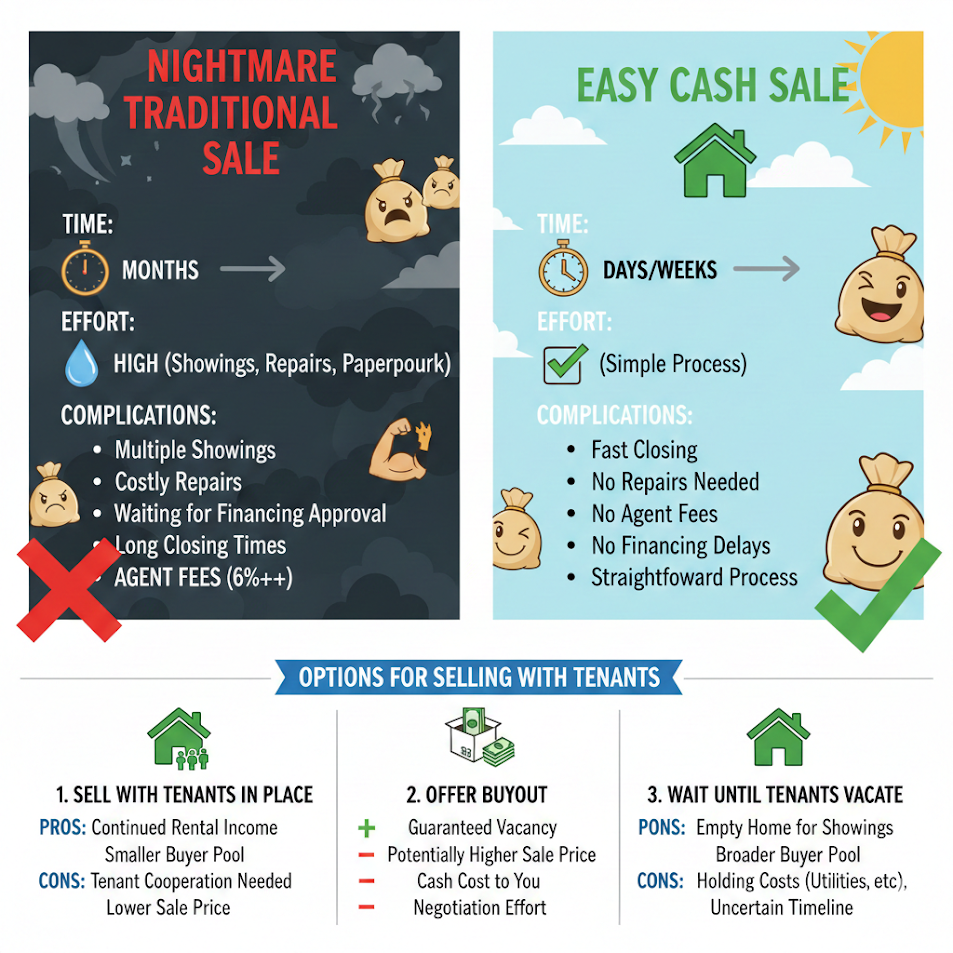
Option 1: Sell With Tenants in Place
We purchase the property subject to the existing lease or tenancy without requiring the seller to vacate the unit before closing. This is often the easiest and most legally straightforward path when the property is occupied by long-term tenants, covered by rent control, or would require a lengthy and expensive relocation process to vacate before the sale could proceed.
Option 2: Cash-for-Keys Managed After Closing
If vacancy is eventually preferred, we can often manage that conversation and negotiation after the sale has already closed and ownership has transferred. That means you are not personally carrying the negotiation burden, the tension of a difficult tenant relationship, or the legal liability associated with a cash-for-keys agreement before the sale is finalized and the property is no longer your responsibility.
Option 3: Sell As-Is Without Property Prep
No cleaning, no repairs, no painting, no staging, and no attempt to force the rental unit into retail-showing condition while tenants are still occupying it and living their daily lives. The offer is based on the property's actual condition and tenancy situation, which means there are no repair demands, no inspection contingencies, and no last-minute price reductions tied to findings that the seller cannot address without tenant cooperation.
Why Traditional Sales Often Fail for Occupied Rentals
Traditional buyers almost universally prefer vacant homes. They want clean, unrestricted access for inspections and showings, flexible scheduling without tenant coordination, and no uncertainty about the occupancy situation after closing. A tenant-occupied rental complicates every one of those preferences — and that friction typically shows up in the form of fewer offers, lower bids, longer time on market, and buyers who back out once they understand the full legal and logistical picture.
Tenants in Bay Area rental properties have strong legal rights that affect every stage of a traditional sale. They may not want strangers walking through their home on a real estate agent's showing schedule. They may keep the unit in a condition that creates poor first impressions for retail buyers. Some tenants actively resist the sale process by being uncooperative with access requests, and under Bay Area tenant protection laws, landlords have very limited recourse when that happens. Buyers meanwhile worry about inheriting lease obligations, rent restriction levels, local just-cause requirements, and the time and cost it could take to regain unencumbered control of the property if they have renovation or occupancy plans.
In San Francisco, certain multifamily property sales can also trigger Community Opportunity to Purchase Act procedures involving qualified nonprofit rights of first offer or refusal. In Oakland, landlords must understand the Rent Adjustment Program and just-cause eviction protections before structuring any rental exit strategy. In San Jose, local tenant protection ordinances and Ellis Act requirements can significantly affect how and when a landlord can exit the rental business. That is why occupied rentals are almost always handled more efficiently by buyers who work within these frameworks daily rather than a retail buyer encountering them for the first time mid-transaction.
When Selling Occupied Makes More Sense Than Waiting
Many landlords delay the sale decision because they believe the property has to be vacant before it can sell at a reasonable price. But waiting is not always the safer or smarter option. While you are waiting for a tenancy to naturally end or for an eviction to work through the legal process, you are still paying property taxes, insurance premiums, ongoing maintenance and repair costs, and management time on a property that is already generating more stress than return. If the rental already feels like a financial and emotional burden, postponing the exit decision does not reduce that burden — it extends it, often at real monthly cost.
Selling with tenants in place typically makes the most financial and practical sense when the rent is significantly below current market rate, when the tenancy is long-term and protected under local just-cause rules, when the property needs substantial work that the landlord does not want to fund, or when the landlord simply wants a clean exit without the legal conflict and timeline uncertainty that comes with a contested eviction process. In those situations, accepting a direct offer on an occupied property is not a compromise — it is often the most intelligent business decision available.
The longer a landlord waits on a property they have already mentally exited, the more those carrying costs erode the eventual net. Every month of delay on a burdensome Bay Area rental represents real money that could have been equity in the seller's next investment or simply returned to their own financial life. Speed and certainty, properly valued, are often worth more than the theoretical upside of waiting for perfect market conditions that may never fully materialize on a rent-restricted, occupied property.
Common Reasons Landlords Sell Occupied Rentals
- They are exhausted by ongoing repairs, deferred maintenance, and rising holding costs that are no longer offset by the rent collected.
- The property is rent-controlled or legally difficult to vacate quickly without significant relocation expense or legal risk.
- The seller inherited the rental and has no desire to take on an active landlord role for a property they did not plan to own.
- The landlord is relocating out of state, retiring, or intentionally downsizing a rental portfolio to simplify their financial life.
- The unit needs significant work and the owner does not want to fund tenant-disrupting repairs or full renovations before selling.
- The landlord wants the certainty and predictability of a direct sale instead of months of coordination, showings, and tenant management during a traditional listing.
Step-by-Step: How We Buy Your Rental
The process is straightforward and designed to minimize what the seller has to manage personally from the moment they reach out through the day the sale closes.
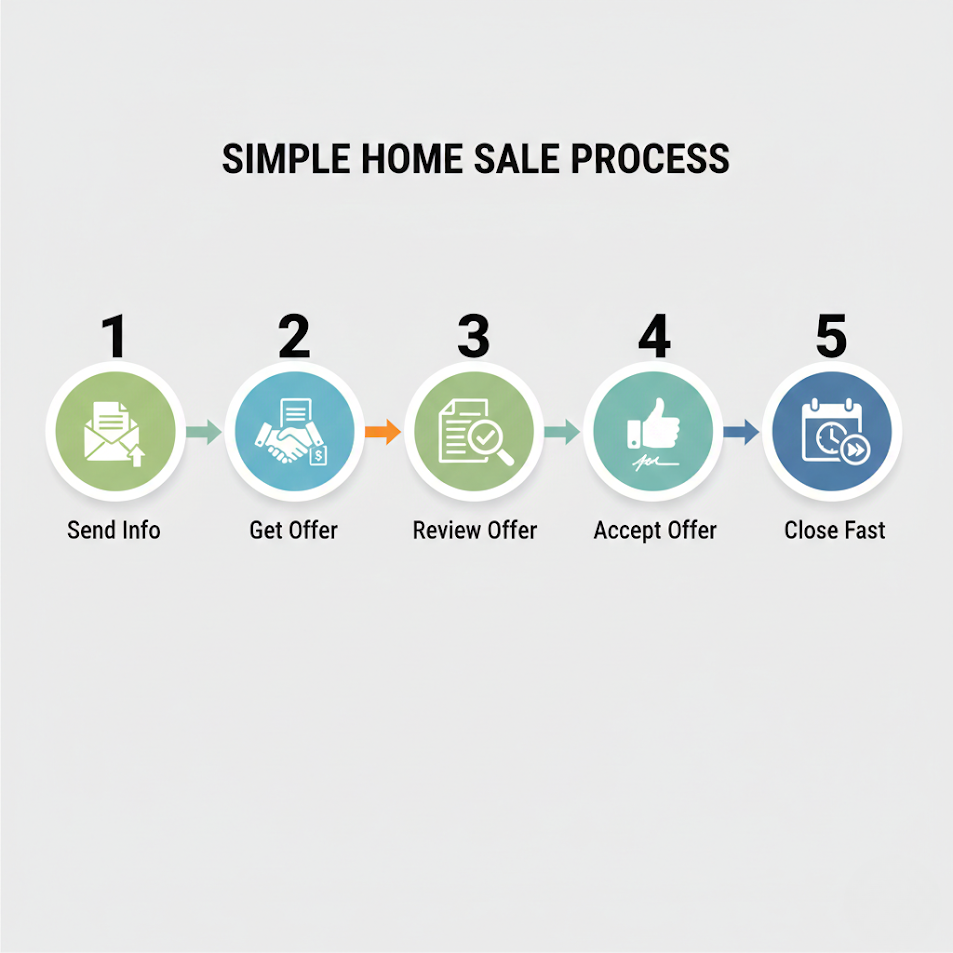
- Send basic info: We only need the property address, current rent roll, and lease end dates to get started — no inspection reports, no repair lists, and no financial disclosures required before the initial review.
- Review the tenancy: We evaluate the property condition, tenancy structure, local rent and eviction rules, and overall situation to understand what the transaction actually looks like before making any commitments.
- Receive a direct offer: We run the numbers on the occupied property as-is and typically deliver a direct cash offer within 24 to 48 hours — not a preliminary range, a real number you can evaluate against your alternatives.
- Choose your closing timeline: You select a closing date that fits your schedule, your financial goals, and your transition plan — whether that is a fast close in two to three weeks or a longer timeline that gives you room to prepare for what comes next.
- Close through a local title company: We close through a licensed title company, handle the paperwork efficiently, and take over ownership of the property — including the tenancy and any ongoing management responsibilities — from that point forward.
Cities and Tenant Rules We Work Around Every Day
Every Bay Area city handles landlord-tenant issues differently, and those differences directly affect how an occupied rental sale gets structured. San Francisco has specialized procedural requirements for certain multifamily sales under COPA, strong just-cause eviction protections, and rent control rules that determine how tenancy affects property value. Oakland has the Rent Adjustment Program, local just-cause protections, and eviction rules that make unilateral tenant removal legally complicated and time-consuming. San Jose has its own tenant protection ordinance and Ellis Act requirements that shape how a landlord can exit rental property ownership without creating a legal liability that outlasts the sale itself.
Understanding these frameworks before structuring an offer is what separates a buyer who can close an occupied rental efficiently from one who discovers mid-escrow that the tenancy creates complications they were not prepared for. We are not trying to turn your sale into a legal seminar or a due diligence exercise that costs you time and money. We are trying to simplify the exit. The more experience a buyer has with occupied Bay Area rental property, the more likely the transaction closes on schedule, at the agreed number, and without the kind of surprises that derail deals when the buyer did not understand the local regulatory picture from the start.
Frequently Asked Questions
Do I need to evict my tenants before I sell?
Not always — and in many Bay Area cases, attempting to evict before selling creates more risk and cost than it eliminates. Many rental properties can be sold with tenants in place when the buyer is experienced with occupied units and understands the local tenancy laws that govern the transfer. A direct sale to the right buyer often removes the eviction question from the equation entirely.
Can I still sell if the property needs repairs?
Yes. A direct as-is sale is specifically designed for rental properties that need updates, deferred maintenance, or larger repair work that the owner does not want to fund before selling. The offer accounts for property condition from the start, which means there are no repair demands, no inspection contingencies, and no contractor coordination required before the transaction can close.
What if my tenants are difficult or uncooperative?
You may still have strong options. A direct buyer experienced with occupied Bay Area rentals can often structure the transaction to work around access limitations and tenant cooperation issues in ways that a traditional retail buyer simply cannot accommodate — because the traditional listing process depends on tenant cooperation at nearly every stage, while a direct sale does not.
How fast can an occupied rental close?
Timelines depend on title clearance, tenancy documentation, and the complexity of the lease situation — but direct cash sales on occupied properties regularly close in two to four weeks, which is dramatically faster than a traditional listing that requires tenant coordination, open market exposure, buyer financing approval, and a full inspection and negotiation cycle before escrow can begin.
Do I need to clean out the property first?
No. Many landlords choose a direct sale specifically to avoid repairs, cleanup, staging, and the logistical challenge of preparing a tenant-occupied property for open-market showings. You do not need to coordinate cleanout with tenants, fund pre-sale improvements, or spend money making the unit more presentable to retail buyers before the sale can proceed.
Why not just list the rental with an agent?
You can — but occupied rentals are consistently harder to show, harder to inspect, and significantly less attractive to typical retail buyers who want vacant properties they can access freely. A direct sale removes the tenant coordination challenge, eliminates the presentation problem, and avoids the buyer pool limitation that comes with marketing an occupied rental on the open market to buyers who were not looking for that type of purchase.
Exit Your Rental Stress Today
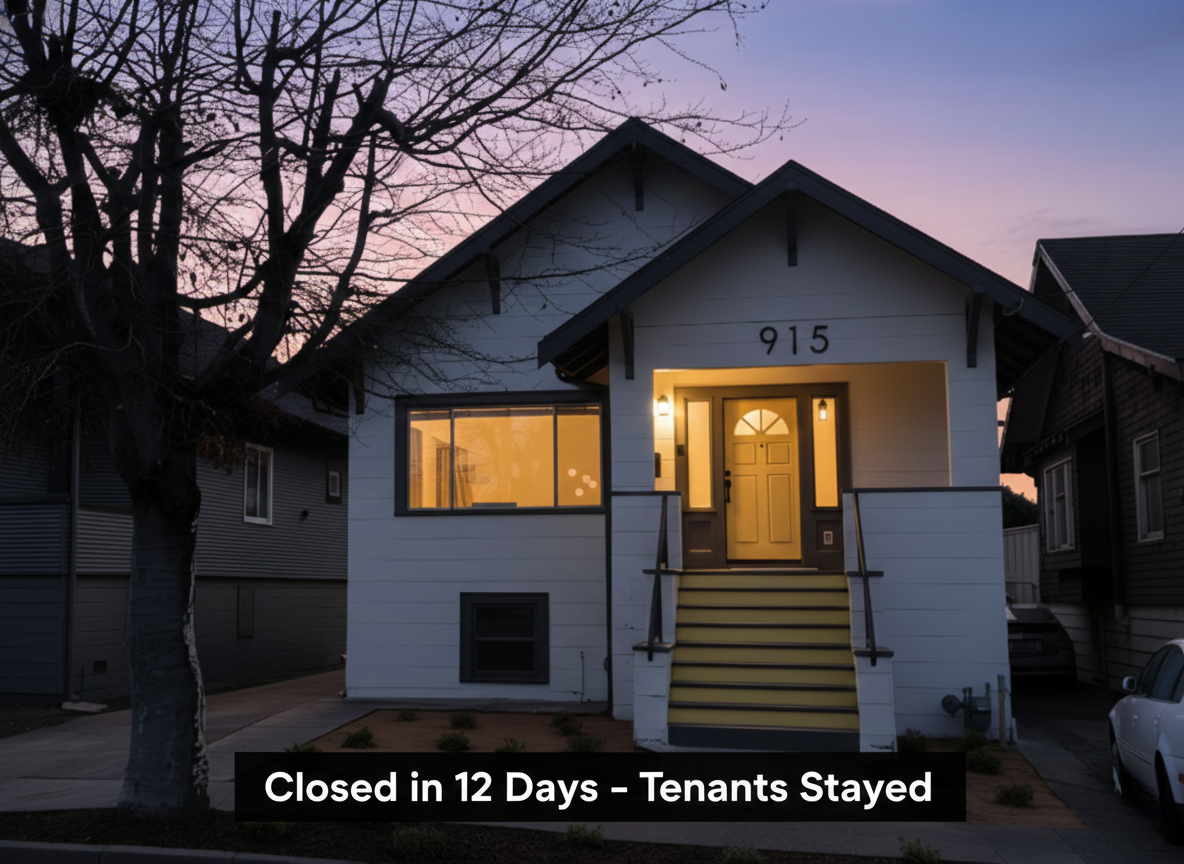
Get a no-obligation cash offer and let us handle the complexity. Sell the rental as-is with tenants in place, avoid the retail listing drama, and close on a timeline you choose — in as little as 12 days or on the schedule that actually fits your situation.
There is no pressure to accept, no fee to get an offer, and no requirement to prepare the property before reaching out. Just tell us about the rental and we will tell you what it is worth in its current condition, with the tenancy as-is, at today's Bay Area market values.
Get My Rental Offer →Real People. Real Results.
What Our Clients Say
Rafael P.

Stress free process, paid all the closing costs and didn’t have to do any cleaning or repairs. Juan Diaz and team are men of their word. They close faster than any realtor listing ever could.
Robert R.
Juan Diaz and his team deliver on their promises and go above and beyond. Their professionalism, honesty, and hard work are very much respected. I recommend them 100%!
Edgar R.
Called Twin Home Buyer with questions. They listened, offered honest advice, and followed up just like they said they would. Super kind and no pressure. Great people!
Jose J.
Awesome to deal with. They let me know upfront if it wasn't the right match and even recommended a great realtor. This company genuinely cares about homeowners.
