If you're looking to sell in the Bay Area, you're facing one of the most important financial decisions of the entire transaction: invest in repairs and try to maximize the listing price, or sell the property as-is and move forward without the cost, delay, and risk that renovation brings. There is no universal right answer — but there is a right answer for your specific situation, and this guide will help you figure out which path actually makes sense.
Bay Area homes are often older and require costly updates before they can compete at retail pricing. Selling as-is is increasingly popular because traditional repairs in this market are expensive, slow, and logistically complicated — even for homeowners with experience managing contractors. When you add permit timelines, material costs, labor availability, and the risk of scope creep once walls are opened, many sellers discover that the repair path costs far more than they initially planned.
As someone who grew up in Oakland and has helped hundreds of Bay Area homeowners navigate this exact decision, I have seen both paths play out across a wide range of property types and situations. This guide breaks down the financial reality of both options honestly, so you can make the decision with clear numbers in front of you — not assumptions.
Get your free as-is cash offer today. We help you decide whether fixing or selling makes the most financial sense for your specific property with zero pressure and no obligation to accept.
Most sellers are surprised by how strong a direct as-is offer can be once repair costs, commissions, carrying costs, and closing fees are subtracted from the traditional listing scenario.
Request Offer →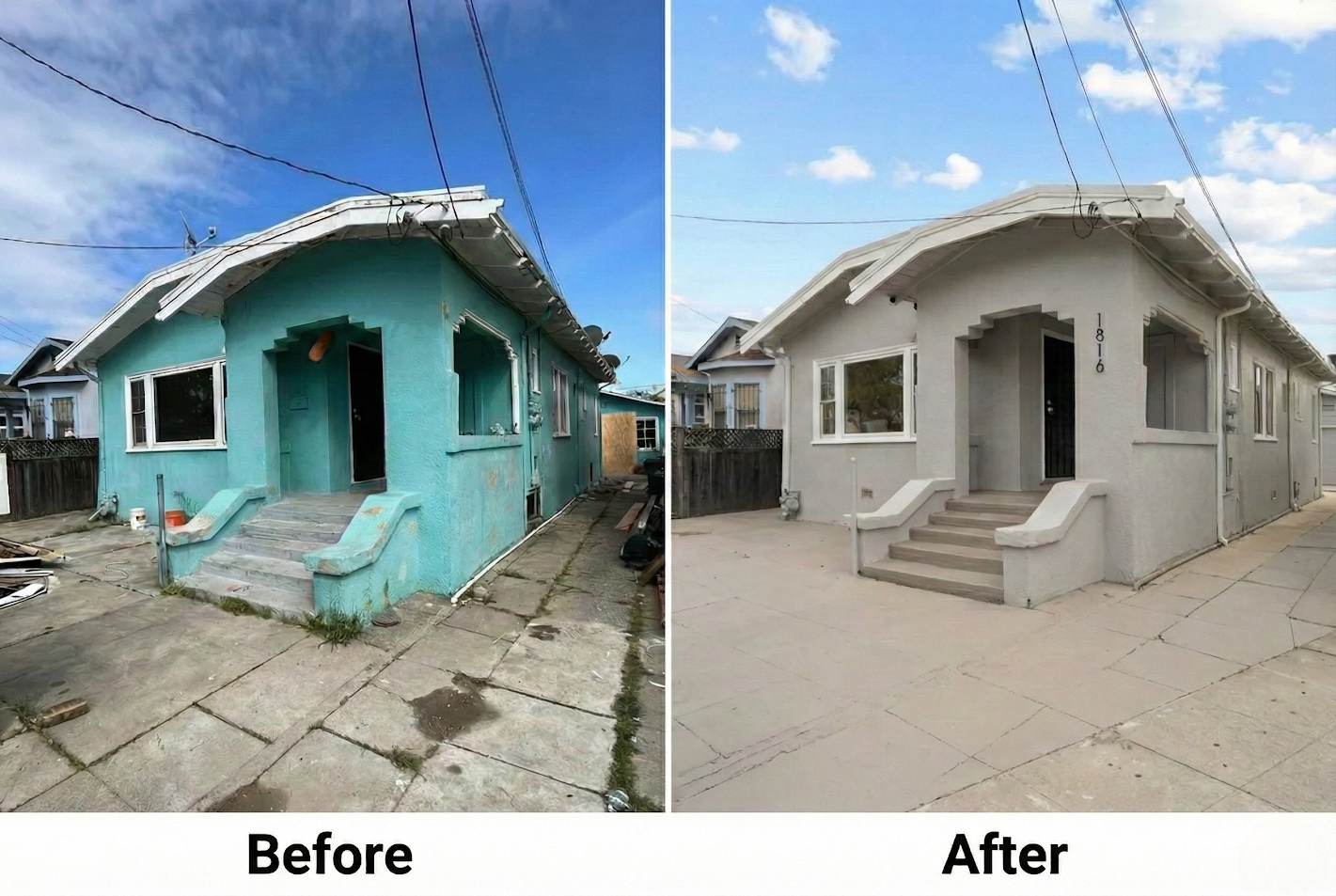
The Bay Area Reality: Repairs Are 3–5x More Expensive Here
Fixing a home in the Bay Area costs significantly more than the national average — and that gap has widened in recent years. Labor shortages, union wage requirements, elevated permit fees, and ongoing material cost inflation make foundation work, plumbing replacement, roofing, and major system upgrades substantially more expensive here than in almost any other U.S. market. A repair that costs $15,000 in a lower-cost state can easily run $40,000 to $60,000 in San Mateo County or Santa Clara County once local labor rates and permit compliance are factored in.
Most homeowners also underestimate how much time the repair process actually takes. Contractor availability in the Bay Area is constrained, especially for licensed specialists in plumbing, electrical, and structural work. City and county permit approvals can add weeks to a project before a single nail is driven. And once work begins, hidden conditions discovered inside walls or under floors frequently expand the original scope — adding cost and delay that was never in the initial budget. This is why "sell my house as-is Bay Area" has become one of the most common search phrases for local sellers who have gotten even a preliminary repair estimate and started doing the math.
Estimated 2026 Bay Area Repair Costs
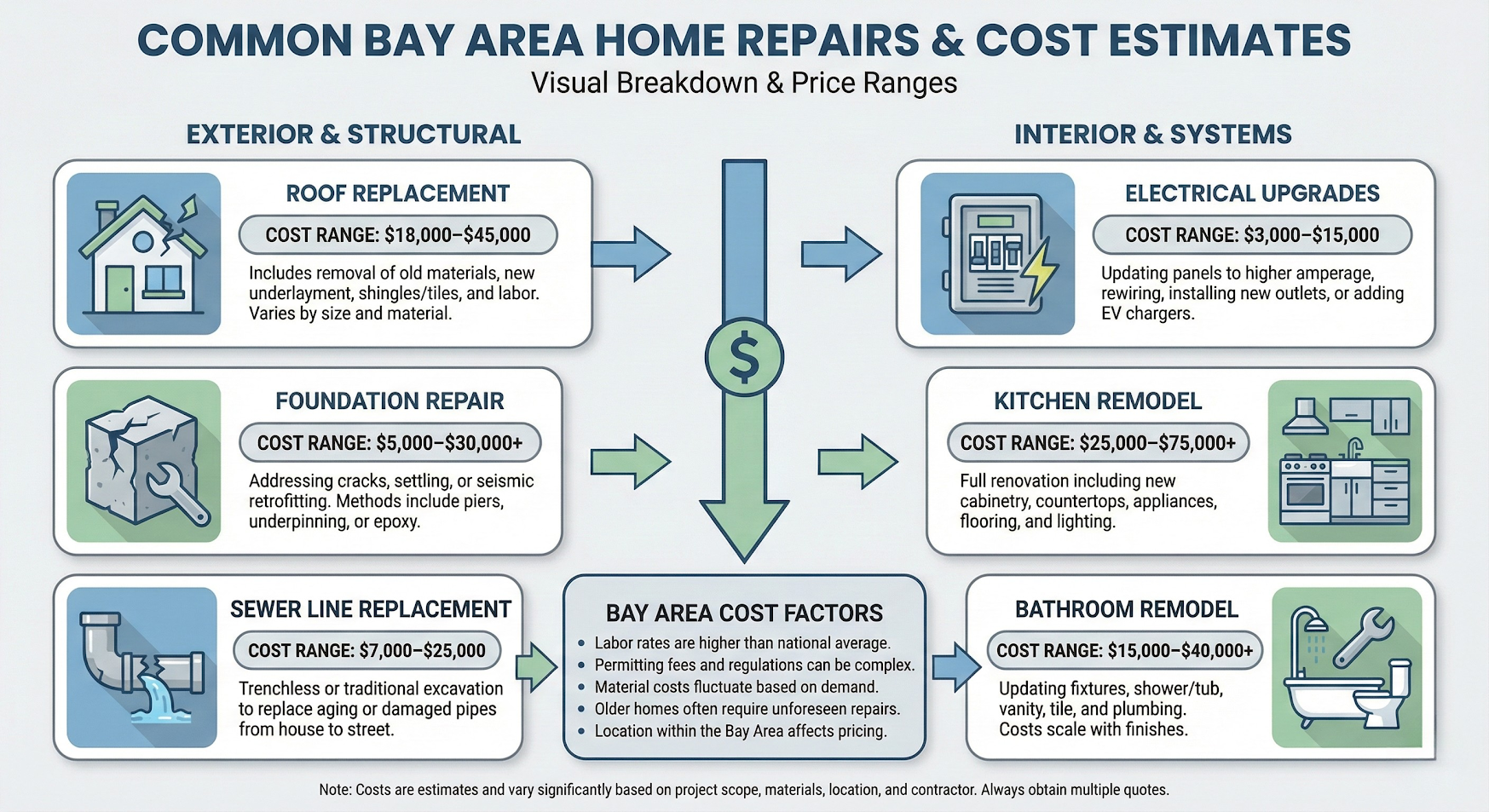
The ranges below reflect typical installed costs for common repair categories in the Bay Area market based on current labor rates and materials pricing. These are starting-point estimates — actual costs vary by city, contractor, property access, permit scope, and what is discovered once work begins. Sellers should treat these as floor figures rather than ceilings when planning a pre-sale repair budget.
- Foundation Repair: $20,000 – $80,000
- Sewer Line Replacement: $12,000 – $25,000
- New Roof: $18,000 – $45,000
- Kitchen Remodel: $35,000 – $75,000
- Full Plumbing Repipe: $15,000 – $35,000
- Electrical Panel Upgrade: $4,000 – $12,000
- HVAC Replacement: $12,000 – $28,000
For many sellers, a single repair category like foundation or sewer represents more out-of-pocket cost than the total net difference between a repaired listing price and a direct as-is offer — especially once agent commissions, closing costs, and months of additional carrying costs are added to the comparison. That is why running the full net calculation before committing to repairs is so important.
When Selling As-Is Is the Best Decision
Selling as-is is the smartest move for inherited properties, homes needing major structural work, properties with deferred maintenance across multiple systems, and houses that have been tenant-occupied for years without significant capital investment. In these cases, the repair scope is often so broad that pre-sale renovation would require managing multiple licensed contractors simultaneously, coordinating permit approvals across several trade categories, and spending months supervising work on a property you are already planning to leave. The math rarely justifies that investment of time, money, and stress.
It is also the right path for sellers facing urgent timelines — job relocations, probate deadlines, foreclosure prevention, divorce settlements, or health-driven transitions that cannot wait three to six months for a traditional sale cycle to complete. In those situations, the value of a certain, fast close is not just financial. It is the ability to move forward with your life on your schedule rather than the market's. An as-is sale eliminates the need for cleaning, staging, open houses, repair negotiations, and the constant uncertainty of whether the next buyer will stay in contract through inspection and financing. You skip all of that and move straight to closing.
For homeowners who have been managing a rental property for years, an as-is sale is often the path of least resistance. Tenant-occupied homes frequently have deferred maintenance, access limitations during marketing, and condition issues that are difficult to remediate while occupants are in place. A direct buyer who can purchase with tenants in place and absorb the condition as part of the acquisition removes an entire layer of complexity that a traditional listing simply cannot accommodate.
As-Is vs. Fix-Up: Side-by-Side Comparison
The table below compares the two paths across the categories that matter most to Bay Area sellers. The goal is not to make one option look better than the other — it is to show the real trade-offs so you can decide based on your actual situation, timeline, and financial priorities rather than assumptions about which path produces more money.
| Category | Sell As-Is | Fix & Sell |
|---|---|---|
| Speed to Close | 7–14 Days | 60–120 Days |
| Repair Costs | $0 | $20k–$150k+ |
| Agent Commissions | $0 | 5%–6% of sale price |
| Showings Required | None | Many |
| Closing Certainty | Guaranteed | Market Dependent |
| Carrying Costs During Sale | Minimal | Months of mortgage, taxes, insurance |
| Inspection Renegotiation Risk | None | Common |
| Permit & Contractor Management | None | Required for major work |
The most important column in this table is carrying costs. For Bay Area homeowners, every additional month the property sits while under repair or listed adds property taxes, insurance, utilities, and mortgage payments to the cost side of the equation. On a Bay Area property with a mortgage, that monthly carrying cost can easily exceed $4,000 to $8,000 per month — meaning a three-month repair and listing process can add $12,000 to $24,000 in holding costs before a single commission dollar is counted.
How Twin Home Buyer Simplifies Your Sale
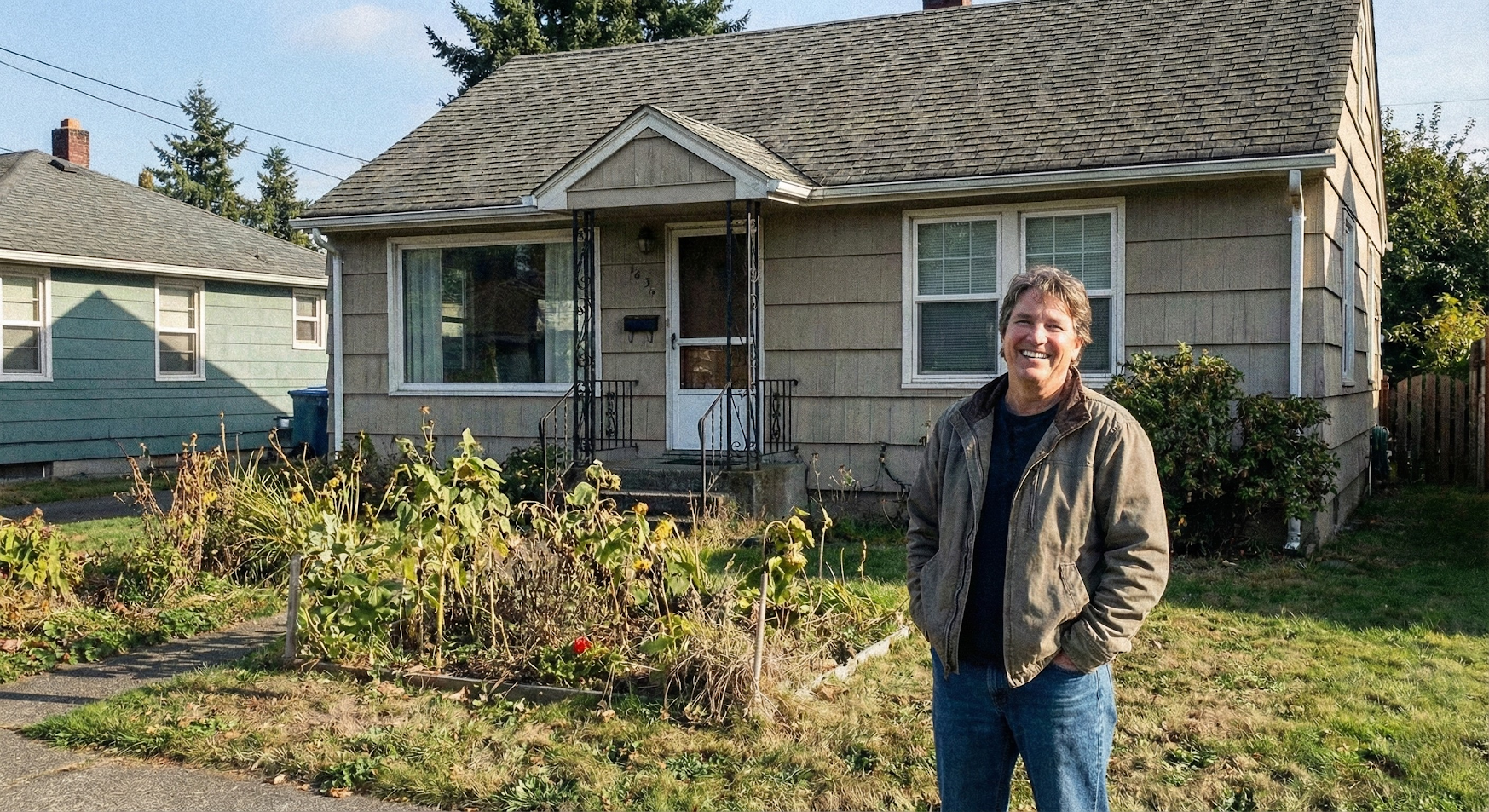
Twin Home Buyer is not a wholesaler or an out-of-state investment fund. This is a Bay Area-based operation run by a licensed general contractor (CSLB #1066892) and a licensed plumbing contractor (CSLB #1132360) who understands exactly what repairs cost in this market — because those repairs are part of the business every day. That means offers are built on real Bay Area labor and material costs, not fear-based estimates or generic national formulas that add thousands of dollars in padding to protect a buyer who does not actually understand the scope.
Because repair costs are assessed internally with licensed contractor knowledge rather than outsourced to third-party inspectors and estimators, Twin Home Buyer does not pay the markup that other buyers bake into their offers as a hedge against uncertainty. That difference — between a fear-based deduction and a knowledge-based deduction — often comes back to the seller in the form of a stronger offer. The process itself is straightforward: a brief walkthrough of the property, a repair assessment based on real costs, and a direct cash offer typically within 24 to 48 hours. You choose the closing date — whether you need seven days or sixty days of flexibility before you move.
There are no agent commissions, no closing cost surprises, no repair demands, and no financing contingencies that can fall through at the last moment. The offer you receive is the offer that closes, on the date you choose, with no last-minute renegotiations based on inspector findings that the buyer claims were unexpected.
For a closer look at how the process works from start to finish, visit our Bay Area as-is home buying page.
Real People. Real Results.
What Our Clients Say
Rafael P.

Stress free process, paid all the closing costs and didn’t have to do any cleaning or repairs. Juan Diaz and team are men of their word. They close faster than any realtor listing ever could.
Robert R.
Juan Diaz and his team deliver on their promises and go above and beyond. Their professionalism, honesty, and hard work are very much respected. I recommend them 100%!
Edgar R.
Called Twin Home Buyer with questions. They listened, offered honest advice, and followed up just like they said they would. Super kind and no pressure. Great people!
Jose J.
Awesome to deal with. They let me know upfront if it wasn't the right match and even recommended a great realtor. This company genuinely cares about homeowners.
