Selling a parent's home is rarely a simple decision. A parent's house can be worth more than it's ever been on paper, and still be the wrong place for that parent to keep living.
The problem is usually not just the house. It is the combination of stairs, maintenance, repairs, family decisions, finances, and figuring out what happens next.
After decades of ownership, many families are not asking, "How do we sell this house?" They are asking: "What is the right decision for our family?"
Why Selling a Parent's Home Becomes the Safer Option
Aging in place works when the home continues supporting the person living there. When it stops, selling a parent's home moves from an uncomfortable idea to a practical one. But many older Bay Area homes were built for a different stage of life.
Features that were never a problem before can become daily obstacles.
- Bedrooms located upstairs when stairs become difficult.
- Bathrooms that require expensive accessibility changes.
- Older layouts that are difficult to modify.
- Deferred maintenance that has accumulated over many years.
- Major repairs involving roofing, plumbing, electrical, or structural issues.
The first question is not always whether to sell. The first question is whether the home can realistically continue working for the homeowner.
What I See With Bay Area Families
Many Bay Area homes were built decades before accessibility became part of the conversation, and it's a common pattern across San Mateo, Alameda, Contra Costa, and Santa Clara counties.
Here's a typical scenario: a two-story home bought in the 1970s for under $50,000, now worth $900,000 to $1.2 million. The parent can't manage the stairs anymore, the one downstairs bathroom isn't safe to use alone, and adding a downstairs bedroom suite would run $60,000 to $100,000 in permits and construction before anyone even talks about moving in. That's usually the moment a family stops asking "should we sell" and starts asking "what actually makes sense here."
The hard part is rarely the house itself. It's helping a family see the real tradeoffs between fixing it, moving, listing it, or selling it clearly enough to actually decide.
Before Deciding What To Do, Understand The Situation
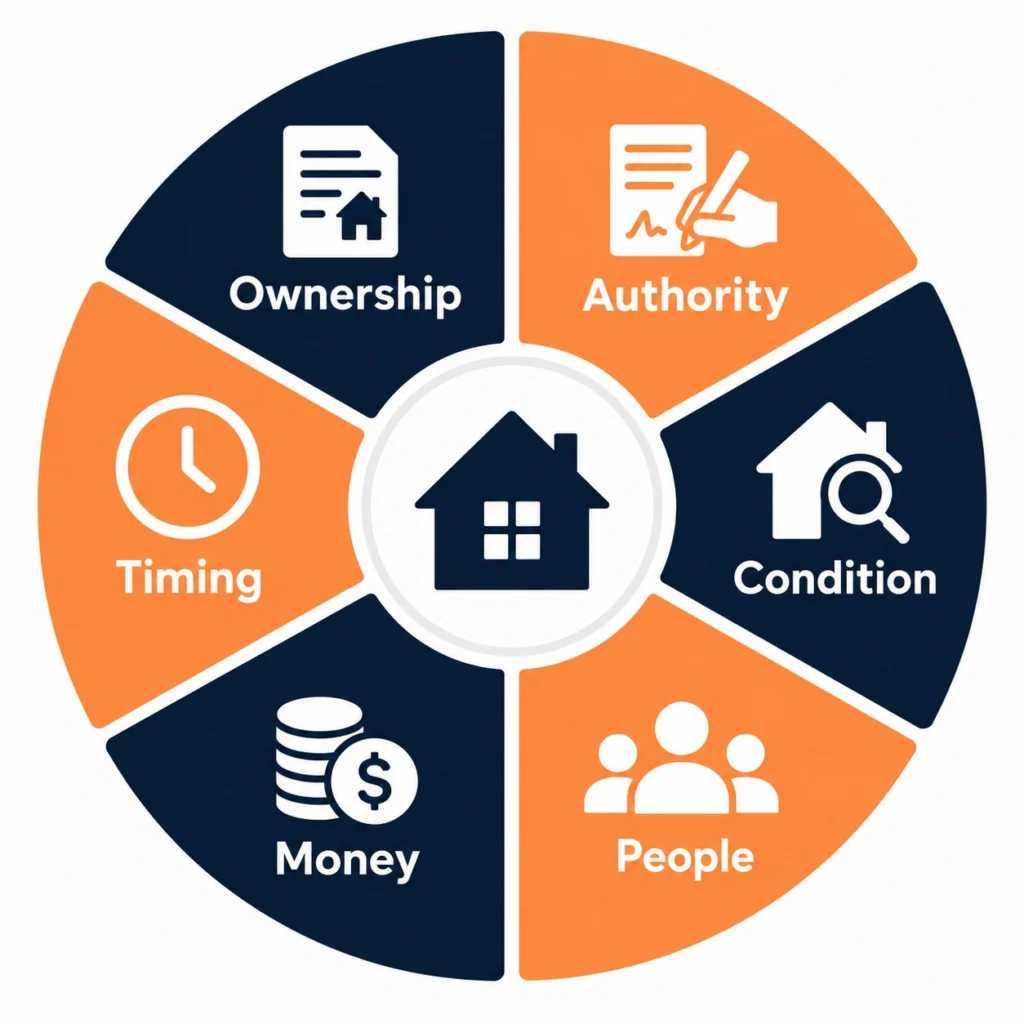
Before selling a parent's home, six things need to be clear.
Ownership
Who owns the property? Is it individually owned, held in a trust, or part of an estate?
Authority
Who has the legal ability to make decisions and sign documents?
Condition
What repairs, safety concerns, or maintenance issues exist?
People
Are heirs, family members, or tenants involved?
Money
Are there loans, liens, taxes, or repair costs affecting the decision?
Timing
Does the family need speed, certainty, privacy, or more time?
What Can Delay Or Stop The Sale?
The house itself is not always the hardest part. Many sales become complicated because of issues surrounding the property.
- A family member disagrees with selling.
- The person wanting to sell does not have authority to sign.
- Trust or probate paperwork is incomplete.
- Liens, unpaid taxes, or title issues appear.
- Tenants or occupants create delays.
A buyer can be ready, but escrow cannot close if the ownership, paperwork, or authority issues are not resolved.
Can This Home Be Modified?
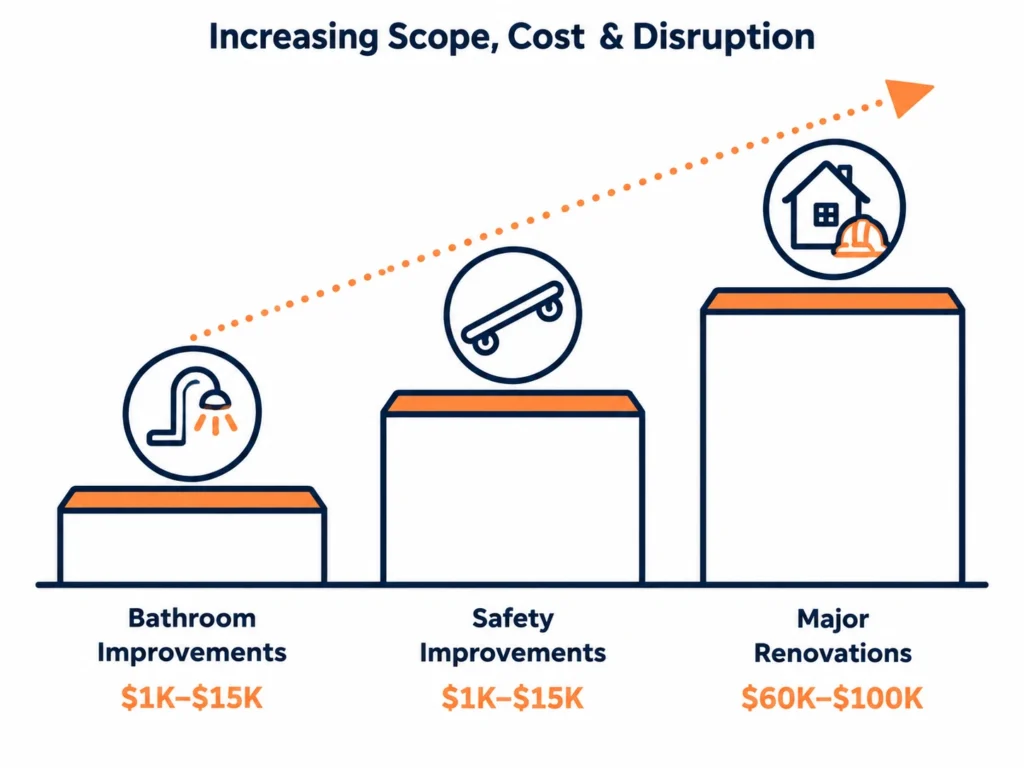
Some homes can continue working with thoughtful improvements. Others require changes that become too expensive or disruptive.
Bathroom Improvements
Accessibility upgrades improve safety and make daily use easier.
Safety Improvements
Lighting, flooring, handrails, and smaller changes often solve a specific problem without a full renovation.
Major Renovations
Large layout changes can involve major costs, permits, and construction timelines.

Should You Modify, Move, List, Or Sell A Parent's Home?
| Option | When It Makes Sense | Considerations |
|---|---|---|
| Modify | The homeowner wants to stay and the house can realistically be improved. | Cost, permits, timeline, and long-term practicality. |
| Move | Another property provides safer living and less maintenance. | Transition, relocation, and family support. |
| List With An Agent | The home is in sellable condition and the family has time for a traditional sale. | Repairs, staging, showings, and a longer closing timeline. |
| Sell As-Is To A Direct Buyer | Repairs, maintenance, or layout limitations have become overwhelming, and speed or certainty matters more than the highest possible price. | A direct sale typically comes in below open-market listing price. In exchange, there are no repairs, no showings, no financing contingencies, and a closing date the seller can count on. |
How I Look At These Situations
Before talking about selling a parent's home, the situation itself needs to be understood.
- Can the homeowner safely remain in the property?
- Does the homeowner want to stay?
- What condition is the property actually in?
- Is the home in good enough shape that listing with an agent is realistic?
- Who has authority to make decisions?
- What financial issues affect the outcome?
- What could delay or prevent a successful closing?
California Prop 19 Considerations
Before 2021, a child who inherited a parent's home could keep the parent's old, low property tax bill no matter what they did with the house — live in it, rent it out, or sell it later. Prop 19 ended that for most families.
Now the low tax base only carries over if the home was the parent's primary residence, the child moves in and makes it their own primary residence, and they file for the homeowners' exemption within one year of the transfer. Rentals, vacation homes, and homes the heir doesn't occupy get reassessed to full current market value — which in San Mateo, Alameda, Contra Costa, and Santa Clara counties can turn a tax bill of a few thousand dollars a year into tens of thousands.
Even families who do move in aren't fully protected. There's a cap — currently just over $1 million above the parent's old assessed value, adjusted every two years — and if the home's market value exceeds that, the amount over the cap still gets reassessed. On an older Bay Area home now worth well into seven figures, that partial reassessment can still be a real number.
The one-year filing window is the detail families miss most often. Because the exact cap and filing rules can shift, confirm the current figures with the county assessor's office or a CPA before assuming what your family's situation qualifies for.
Legal Authority Before Selling
A cash offer doesn't mean much if the wrong person signs. Who can legally sell the house depends entirely on how it was owned.
If the home was in a living trust, the successor trustee can usually sell it without going to probate court at all — the trust document and a death certificate are typically enough to satisfy escrow. If the home was only in the parent's name with no trust, the estate generally needs someone appointed by the court — an executor if there was a will, an administrator if there wasn't — before a sale can close. Full probate in California typically takes 9 to 18 months from filing to final distribution, sometimes longer if the estate is contested or complicated, so knowing early whether it's required changes the whole timeline for a family. Smaller estates sometimes qualify for simplified, faster procedures instead of full probate, but real property has its own separate rules from other assets, and the qualifying thresholds change over time.
If there's more than one heir, everyone with an ownership interest generally has to agree to the sale or be bought out — one holdout can stall a deal indefinitely. This is one of the most common reasons a sale falls through after an offer is already on the table.
Every one of these paths has its own paperwork and timeline, and the right one depends on your family's specific situation — a probate attorney can tell you in one conversation which path applies before you spend time marketing or negotiating a sale that can't actually close yet.
Frequently Asked Questions
Can I sell my parent's house if they can no longer maintain it?
Usually yes, but who signs depends on ownership. If the home is in a trust, the successor trustee can typically sell it directly. If it's only in the parent's name and the parent can't sign, someone generally needs legal authority first — a power of attorney while the parent is living, or a court-appointed executor, administrator, or conservator depending on the situation. Confirm which applies before listing or accepting an offer, since the wrong signature can unwind a sale late in escrow.
Do family members need to agree before selling a parent's home?
If more than one heir holds an ownership interest, yes — each one generally needs to sign off or be bought out. A trust with a single successor trustee avoids this, since the trustee usually has authority to act alone. Where heirs disagree and no trustee has clear authority, the sale often stalls until the disagreement is resolved or a court weighs in.
Is remodeling cheaper than selling?
Usually not, once permits and contractor timelines are factored in. Small safety fixes — grab bars, better lighting, a walk-in shower conversion — are often worth doing and typically run a few thousand dollars to around $15,000. A full accessibility remodel with a downstairs bedroom or bathroom addition is a different scale of project, commonly quoted in the $60,000 to $100,000 range in the Bay Area with permitting delays on top. Costs vary widely by city and scope, so treat those as ballpark figures and get local bids. At that scale, selling as-is or listing without doing the work often nets a family more than sinking money into a home they may not keep.
Can I sell a house as-is?
Yes. Selling as-is means the buyer takes the property in its current condition — no repair requests, no staging, no inspection negotiations. It fits families who need speed or certainty more than the highest possible price, or who don't want to front the cost of repairs before a sale. One thing as-is does not remove is disclosure: California sellers are generally still required to disclose known material defects, though certain trust and estate sales carry exemptions. The tradeoff is real, too — an as-is sale to a direct buyer typically comes in below what a fully repaired home might fetch on the open market. Whether that tradeoff makes sense depends on the cost and time it would take to get the home listing-ready in the first place.
How does California Prop 19 affect inherited homes?
It depends on what the heir does with the house. If it was the parent's primary residence and the heir moves in and files for the homeowners' exemption within the required window, the old lower tax base can carry over up to a cap. If the heir doesn't move in, or the value exceeds the cap, the home — or the amount above the cap — is generally reassessed at current market value. The cap amount adjusts periodically, so confirm the current figure and how it applies to your situation with the California State Board of Equalization or your county assessor. This is general information, not tax or legal advice.
Need Help Understanding Your Options?
Selling a parent's home often comes down to understanding the options before anything is decided. Remodeling makes sense for some families. Moving makes sense for others. And sometimes selling as-is, without doing any repairs, is what actually works. The only way to know which one fits is to understand the property, the paperwork, and the real numbers first.
Get My Cash OfferReal People. Real Results.
What Our Clients Say
Rafael P.

Stress free process, paid all the closing costs and didn’t have to do any cleaning or repairs. Juan Diaz and team are men of their word. They close faster than any realtor listing ever could.
Robert R.
Juan Diaz and his team deliver on their promises and go above and beyond. Their professionalism, honesty, and hard work are very much respected. I recommend them 100%!
Edgar R.
Called Twin Home Buyer with questions. They listened, offered honest advice, and followed up just like they said they would. Super kind and no pressure. Great people!
Jose J.
Awesome to deal with. They let me know upfront if it wasn't the right match and even recommended a great realtor. This company genuinely cares about homeowners.
Recent Blog Posts
Expert tips on selling your house fast and real estate insights
