Termite colonies silently take hold of your home and begin creating devastating damage before you ever notice. Termites cause billions of dollars in damage each year in the U.S., and California homes are among the most at risk. This guide explains the most important termite infestation signs and prevention in California so you can protect your property early—before repairs become overwhelming and expensive.

Termite Damage by the Numbers
Termites cost U.S. property owners over $6 billion each year.
The average repair bill ranges from $3,300 to $10,000—sometimes more.
Some colonies eat through a 2×4 in just 5 months.
California ranks among the top 10 states for termite activity.
California’s warm climate allows termites to thrive year-round, meaning homes here face 100% ongoing risk.
How to Identify Termite Infestation Signs in California
Early detection is everything. The sooner you recognize the common termite infestation signs in California, the easier it is to stop the damage.
1. Swarming Termites
Swarming occurs when flying termites emerge from soil or wood on a warm day—typically in spring or early summer. If you see dozens of winged insects or piles of discarded wings, you are likely facing a termite problem.
2. Mud Tubes
Subterranean termites build mud tubes along walls, foundations, or crawl spaces to travel safely. These pencil-sized tunnels are one of the strongest indicators of active termite infestation.
3. Hollow or Damaged Wood
If wood sounds hollow when tapped or breaks easily, termites may already be inside. Look for blistering paint, buckling floors, soft wood, or sagging drywall.
4. Frass (Termite Droppings)
Drywood termites leave behind tiny pellet-shaped droppings near windowsills, baseboards, or damaged wood.
5. Tight-Fitting Doors or Windows
As termites eat through wooden frames, they cause warping that prevents doors or windows from opening smoothly.
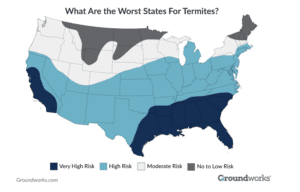
As you can see California is fully engulfed. California is 100% at risk, it
How can you tell if you are under attack?
The most visible way to tell if you have a termite issue is the swarm. Multiple winged bodies will come out of the ground on a warm day, mostly seen in spring and summer. You should check your lawn on a warm day. Termites will emerge from the ground and “swarm.”
Do not confuse termites with ants. Ants are not favorable but will not cause destruction the way termites are keen to do.
How to tell the difference between ants and termites:

- Ants have a bent antennae, 90 degree angle. Termites have straight antennae
- Both insects have wings. Ants have shorter rear wings, termites have 4 wings of equal length.
- Shape of the body. Termites have a thick, bull-like rectangle shaped body. Ants have a thin body, looking as though they have a waist.
Termites eat wood from the inside out. Therefore, if you tap on a piece of wood and it sounds hollow, you need to call a specialist as soon as possible. Termite infestation is not something you can fix on your own. As mentioned in our past blogs, it is important to constantly be giving yourself a home inspection. Like cancer, you are better off if you catch the problem early. An infestation or colony can take between 3 to 5 years to amass. You will be in big trouble if they have reached the maturity of 5 years. It is best to call a professional, one who is licensed and governed by the structural pest control act.
What should you look out for?
- As mentioned before, look for the swarm
- Do you find these nasty invaders stuck to any windows or doors? Termites target windows and doors where wood is more likely to be exposed.
- Check your molding, is the damage to the paint or wallpaper. This goes back to how to give yourself a home inspection. Be on the lookout for bubbling paint, buckling wood, dented or sunken areas.
- Mud tubes, these are the long narrow arteries that can be seen on both inside and outside your house.
- Termite Droppings!
Termite droppings are also referred to as “frass,” it is an appropriate name because they are a pain in the ass. Frass looks almost like saw dust, wood colored and pellet shaped. In our line of work we buy homes as-is. We often come across sellers who are trying to escape the nightmare of Termites.
Here are some pictures, we have seen on the job that indicate the need to have a licensed professional evaluate:
To the left shows the base and or side of the kitchen cabinet sink shelf is water damaged. The wood was soft and frass was found. Below notice how there is evidence of water damage and rotted wood.


How to prevent:
✅Inspect your home on a regular basis
✅Reduce any moisture sources ( standing water, leaky faucets or down spouts on the gutters are clogged)
✅Maintain good moisture control throughout
✅Remove any wood debris close to your house. Keep firewood away from the structure.
✅Do not over mulch the perimeter of your house.
✅You can treat your lawn with nematodes. This is a sustainable, non chemical way to prevent termites.
✅Another great option is diatomaceous earth (DE). First used by the Greeks as an additive to their building material. This sustainable option is made of amoebas. Be careful to read instructions carefully as some form of DE may be harmful if inhaled. It not only is used to fight termites but ticks, slugs and fleas as well.
Our signing off advice always is to be proactive. Do yourself a favor and regularly check your home. If you see any signs of termites, be sure and call a licensed professional as soon as possible. Verify their license with the SPCB, structural pest control board. Here is the link needed to check the licensing: