The short answerYes, you can buy a house before yours is sold. Sell first and move once, make an offer that depends on your sale, borrow against the equity in the house you have, or sell to a direct buyer on a date that fits your purchase. Each path costs you something (time, money, risk or a weaker offer), so pick the one you can afford.
Getting started
You found the home you want. But your down payment is stuck in the house you live in now.
You don’t want to move twice or carry two mortgages. Here are four ways to fix that, what each one costs you, and who each one fits.
If you’re leaving the Bay Area altogether, also read our guide to selling before you move or from far away.

How to buy a house before yours is sold: the four options
Each option asks you to give up something different.
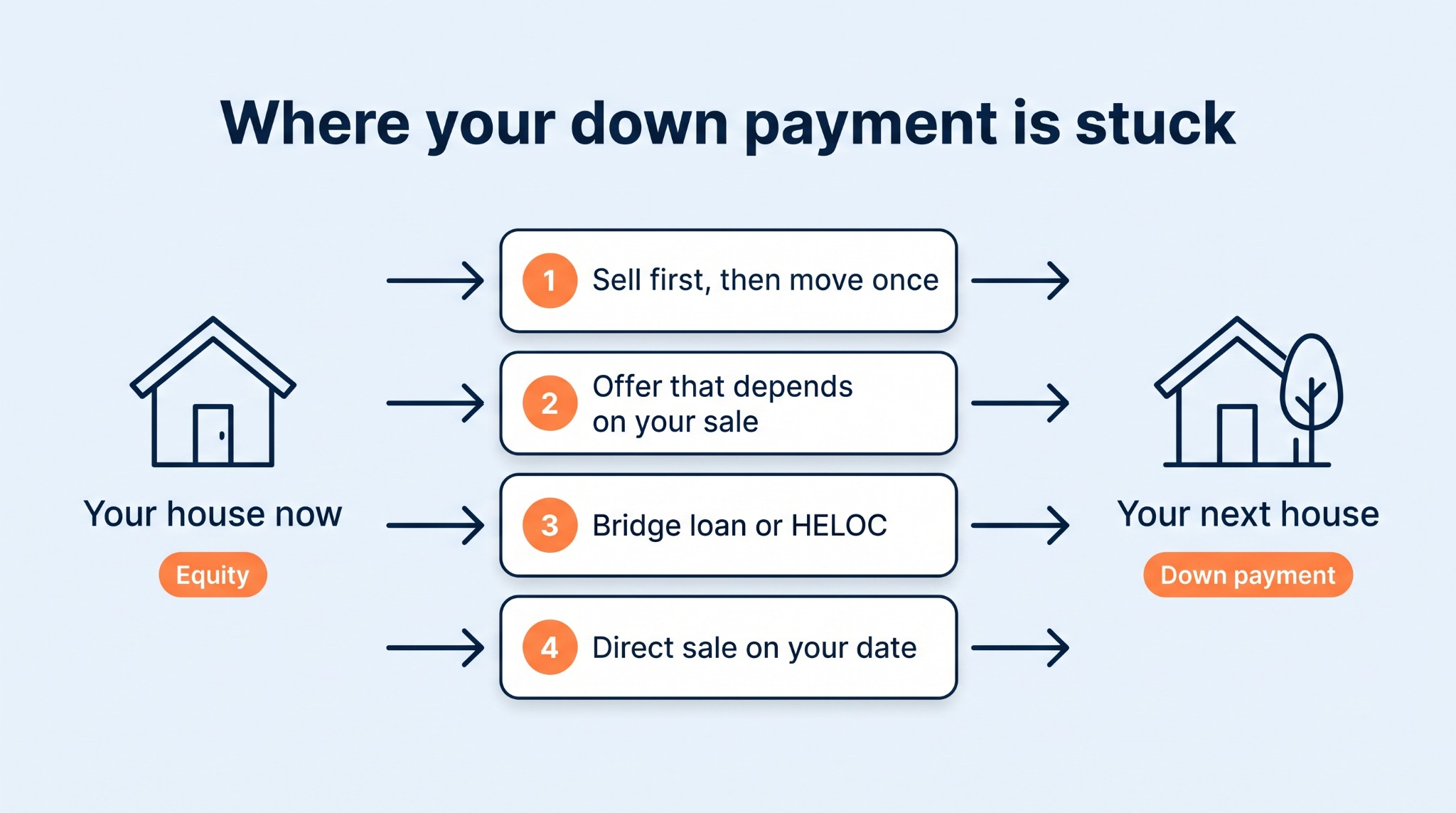
Sell your house first, then move once
Simplest on money. Hardest on timing.
Make an offer that depends on your sale
Protects you. Some sellers won’t take it.
Bridge loan or home equity line
Stronger offer. Extra debt until you sell.
Direct sale on your date
Predictable date. Compare the price.
Sell your house first, then move once
Selling first is the cleanest way to free up your equity. Once your house closes, you know exactly what you have for the next down payment.
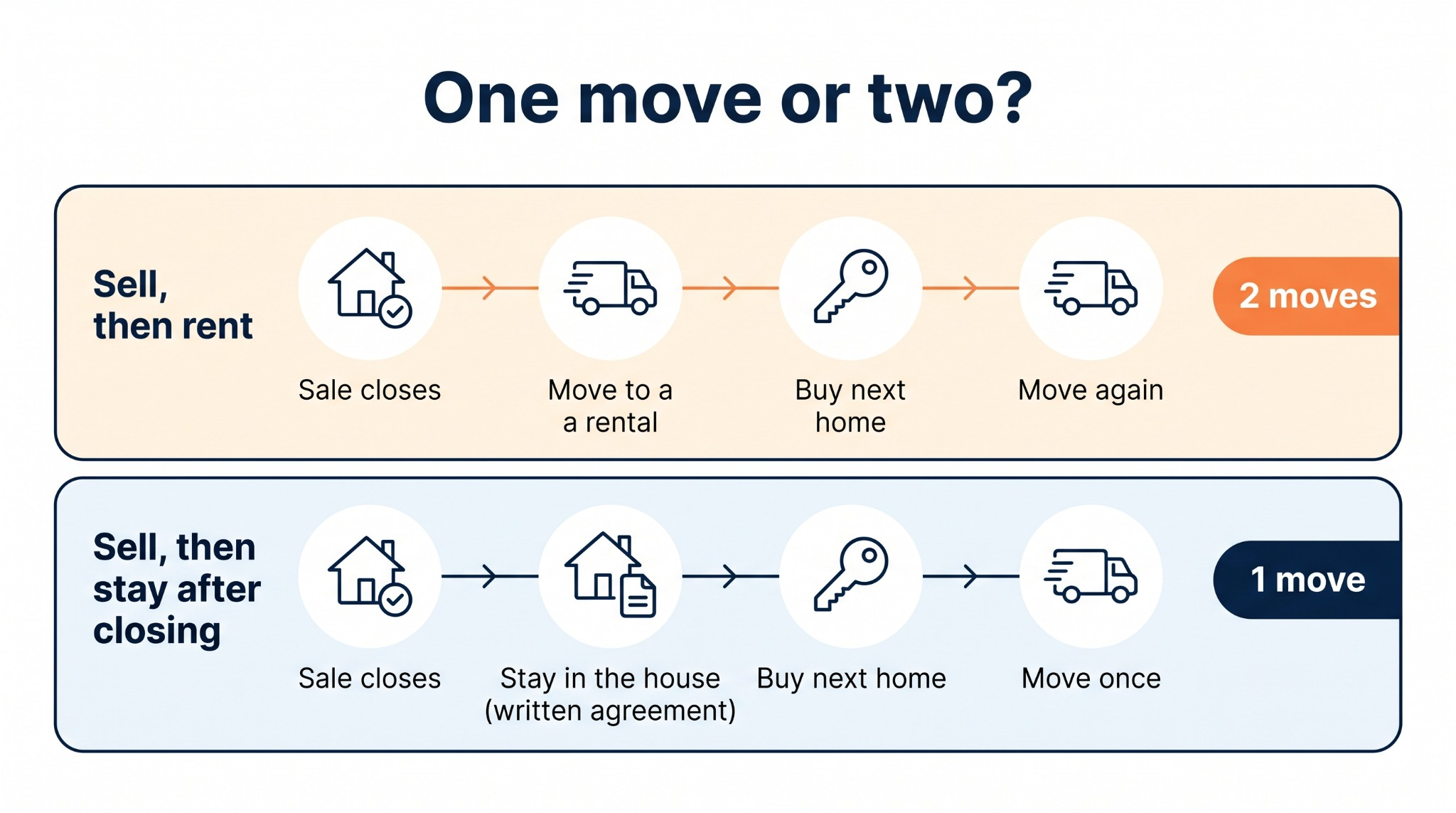
The catch is the gap. If your sale closes before you close on the next house, you need somewhere to live. Renting in between means moving twice.
The way around it is to stay in your house after closing, under a written agreement with your buyer, until your moving day. It isn’t automatic: the buyer has to agree, in writing, before you close. We explain what goes into that agreement in our guide to staying in your house after selling.
Who this fits
Owners who need every dollar of equity for the next purchase and don’t want a second loan.
If selling first is your path, ask us what an as-is sale and a flexible move-out would look like for your house. Call (415) 415-8946 or fill out our contact form.
Legal details: This section is general information, not legal advice. Confirm your situation with a real estate attorney before you act.
Can you offer on a house before yours is sold?
Yes. You can make an offer that depends on selling your current house. That condition is called a home sale contingency.
Freddie Mac explains that contingencies let you change or end your purchase contract if the conditions aren’t met. A home sale contingency sets a specific window of time to sell your existing home.
That protects you. It doesn’t protect the seller. From the seller’s side, Freddie Mac notes that a home sale contingency is an added risk, since there’s no guarantee your house will sell. The clause also usually lets the seller keep marketing their home to other buyers while you sell yours.
Freddie Mac also warns that too many contingencies can make an offer less attractive. If the house you want has several offers, yours may be the weakest. If it has been sitting, the seller may take it. Ask your agent how local sellers treat these offers right now.
You may not need a direct sale at all
If you have the income and equity, a contingent offer or a lender product (next section) may let you list your current house on the open market with an agent and still buy the next one. If your numbers support that, it may be a good fit. Talk to a licensed lender.
Loan details: This section is general information, not financial or legal advice. Only a licensed lender can tell you what you qualify for and what it will cost.
Bridge loans and home equity lines: borrowing against the house you have
The third option is to borrow against your current house so you can buy before it sells. Only a lender can tell you what you qualify for and what it costs.
Bridge loans
Federal lending rules describe a bridge loan as a temporary loan, for example one used to buy a new home while you plan to sell your current one. Before you sign, ask the lender three things: what it costs in total, how and when you repay it, and what happens if your house takes longer to sell than you planned.
Home equity lines (HELOCs) and home equity loans
The CFPB describes a HELOC as a line of credit that works like a credit card, except you borrow against your home’s equity. A home equity loan gives you a set amount, paid out in one lump sum.
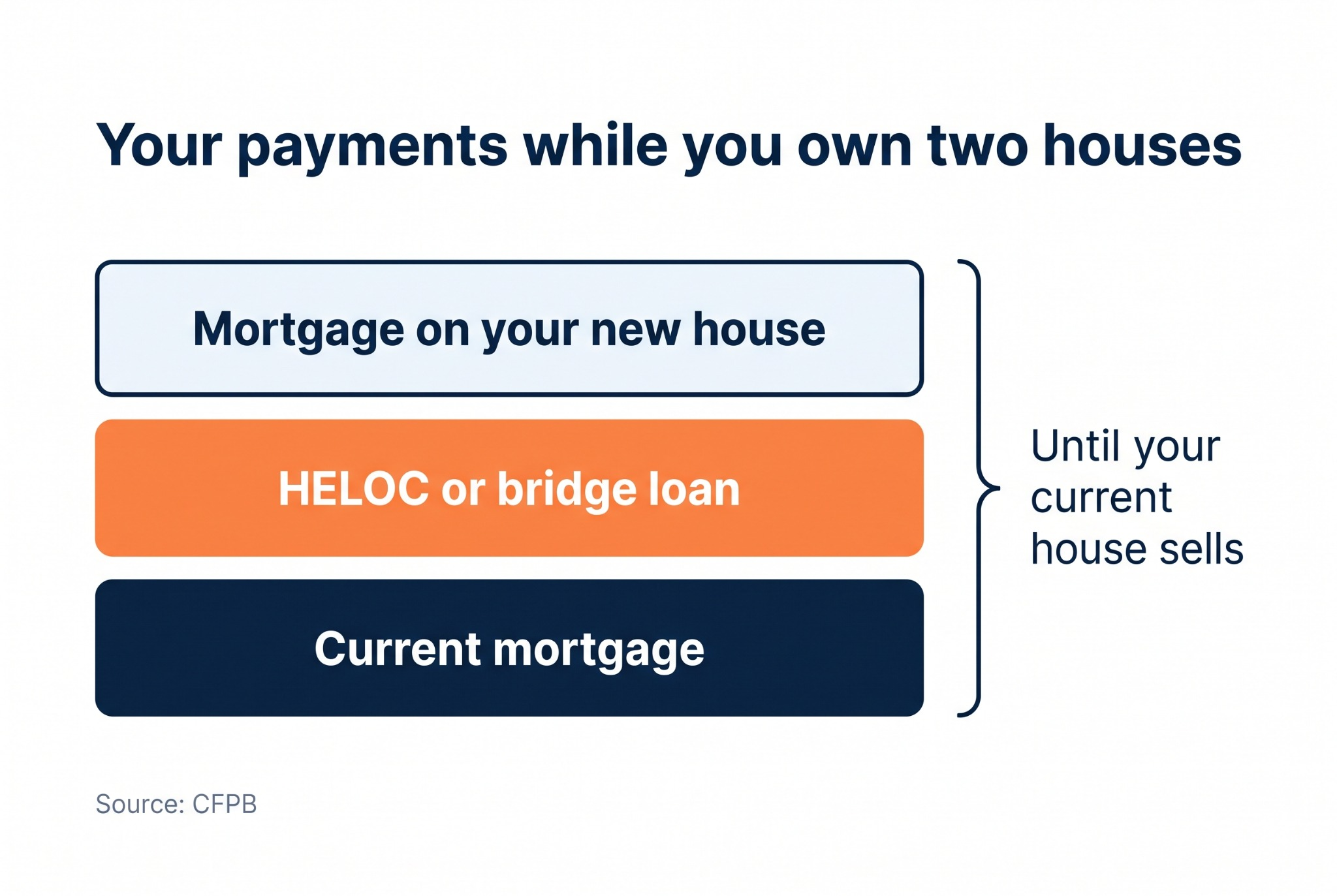
If you already have a mortgage, the CFPB says either one counts as a second mortgage you pay on top of your first. Add the mortgage on the new house, and for a while you could be paying three loans. HELOCs also usually have adjustable rates, so the payment can change. And if your home’s value drops a lot, your lender may stop letting you draw more.
Also ask whether they’ll open a line on a house you plan to sell soon.
Who this fits
Owners with steady income and enough equity to qualify, who can handle extra payments until the old house sells.
Sell to a direct buyer on a closing date that fits your move
The fourth option is a direct sale. You sell the house as-is to a cash buyer like Twin Home Buyer, without listing it. We’re not a real estate brokerage, and we’re not your agent or broker. No repairs and no showings while you house-hunt. We pay the standard seller closing costs.
For a move, the date is what matters. With Twin Home Buyer, you pick a closing date that fits your move. Some sellers can also stay for an agreed period after closing, depending on the agreement. Get both in writing.
The trade-off is price. A direct offer for a house as-is may come in below what the open market could bring after repairs and showings. Get an agent’s estimate too, and compare the two on the money you’d actually walk away with.
Who a direct sale is for
A direct sale isn’t for everyone. It tends to fit when:
- Your house needs work you don’t want to pay for or manage while you buy the next one.
- You need a firm date that lines up with your purchase.
- You don’t want showings while you house-hunt.
- You want to move once. Some sellers can stay for an agreed period after closing, depending on the agreement.
It’s probably not for you if your house will do well on the open market and you can wait for it to sell, or a lender approves you for a bridge loan or HELOC. Then list it with an agent and compare.
Want a real number to compare? Call us at (415) 415-8946 or fill out our contact form.
Buy first or sell first: how the four options compare
| Option | Time | Risk | Cost | Stress |
|---|---|---|---|---|
| Sell your house first, then move once | Depends on how soon you find and close on the next house | Low on money. The risk is not finding the next house in time | Rent and a second move, unless you stay after closing | High if you move twice. Lower if you stay until moving day |
| Offer that depends on your sale | Tied to the sale window written into the contract | The seller may keep marketing and choose another buyer | No new loan, but your offer may be weaker than others | Medium. Two deals depend on each other |
| Bridge loan or HELOC | You can make your offer once a lender approves you | You carry the extra debt if your house is slow to sell | Interest and lender costs, plus extra payments until you sell | Medium to high. More payments each month |
| Direct sale on your date | You agree on the closing date with the buyer | Ask the buyer how the purchase is funded and what happens if the date slips | The offer may be below open-market value | Low. One date, no showings |
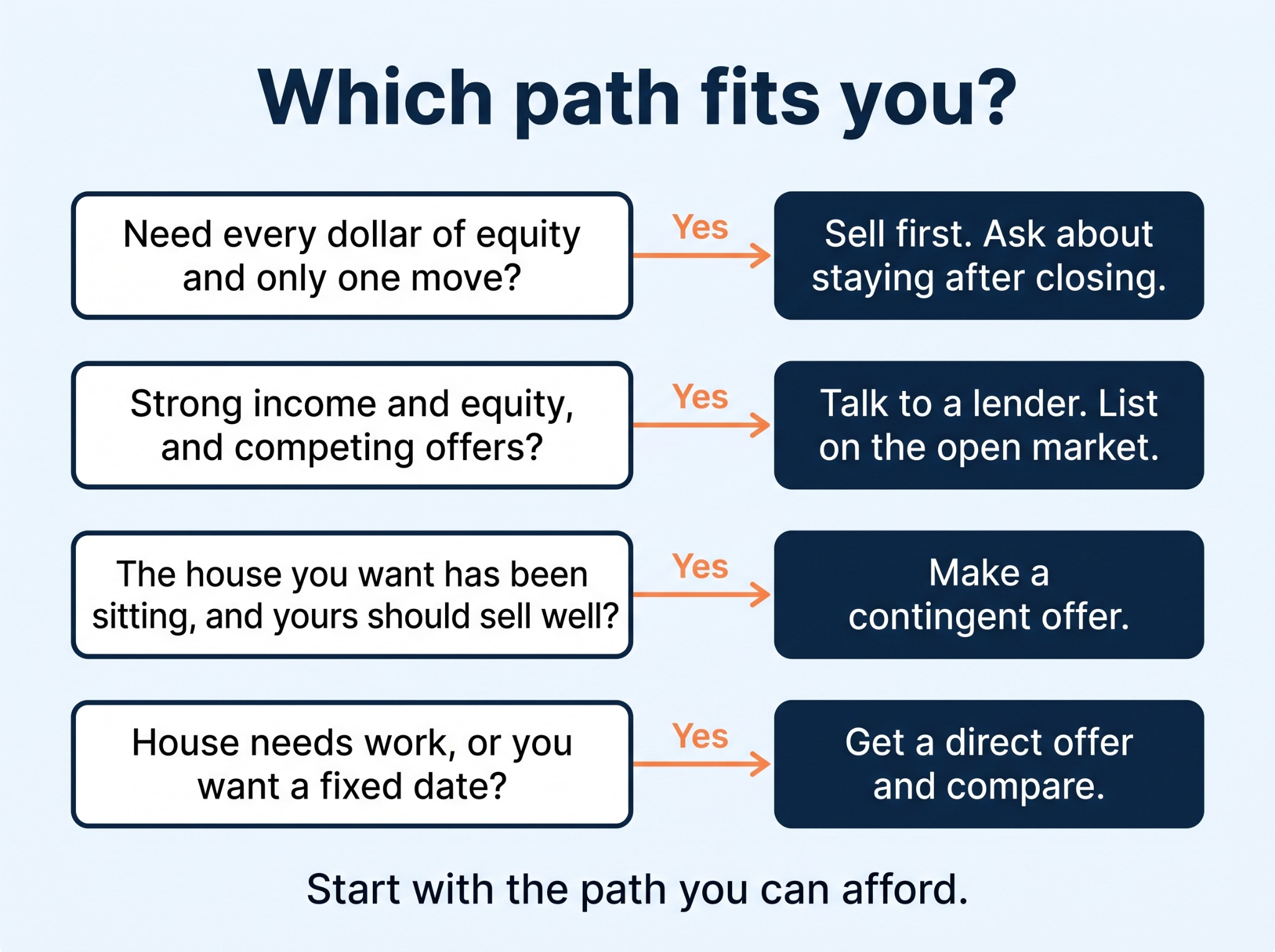
Which way to buy before you sell fits you?
- You need every dollar of equity and want one move: sell first, and ask your buyer about staying after closing.
- The house you want has been sitting, and yours should sell well: a contingent offer may work.
- You have strong income and equity, and you’re up against other offers: talk to a lender about a bridge loan or HELOC, and list your house on the open market.
- Your house needs work, or you want a fixed date and no showings: get a direct offer and compare it to what a listing would net you.
Frequently asked questions
Can you buy a house before yours is sold?
Yes. Make an offer that depends on your sale, borrow against your equity, or line up both closing dates. Which one works depends on your income, your equity and the competition for the house you want.
Will a seller accept an offer that depends on my house selling?
Some will and some won’t. Freddie Mac notes that this kind of offer is an added risk for the seller, who can usually keep marketing the house while you sell yours.
Can I use my home equity for a down payment before I sell?
Possibly, through a HELOC, a home equity loan or a bridge loan. If you already have a mortgage, a HELOC or home equity loan is a second mortgage on top of your first. A licensed lender can tell you what you qualify for.
Do I have to move out on closing day?
Not always. Some sales include a written agreement to stay for a set time after closing, if the buyer agrees. Here’s what goes into a stay-after-closing agreement.
Will a direct sale get me less money?
It might. An as-is offer can be lower than what your house could bring on the open market after repairs and showings. Compare both on what you’d walk away with.
Related guides

About the author
Juan Diaz
Founder & CEO, Twin Home Buyer
Juan started at 12, sweeping the homes his Uncle George bought in Oakland. Raised in East Oakland, he's been flipping homes since 2005: 20+ years making homes beautiful and improving the communities he grew up in.
Not sure which path fits your move?
Want a real number to compare? Call us at (415) 415-8946 or fill out our contact form. If it doesn’t work for you, no hard feelings.
Request a Cash Offer