The short answerInsuring a vacant home can work differently from insuring a lived-in one. California’s insurance department lists losses to a house vacant for 60 days or more among things a homeowners policy generally doesn’t cover, so call your insurer before the house sits empty for long. Then put one person in charge of keys and visits, add up what each month costs, and compare renting, listing and an as-is sale.
Getting started
General information only: This guide to insuring a vacant home is not legal, tax, or insurance advice. Confirm how your own policy works with your insurer or agent before you act.
The tenants moved out. Or your mom or dad passed away, or moved somewhere with more care. Now the house is empty, and you may live an hour away or three states away.
In an empty house, nobody notices a slow leak. Nobody sees the broken window. The bills keep coming anyway. And as the state’s insurance guide below shows, your policy may treat an empty house differently.
Here’s the checklist for insuring a vacant home and getting through the weeks it sits empty: insurance, who lets people in, utilities, what each month costs you, and how to decide what to do with it.
Insuring a vacant home: call your insurer before it sits empty for long
What California’s insurance department says
The California Department of Insurance publishes a consumer guide to homeowners insurance. In its list of perils a homeowners policy generally doesn’t cover, it includes losses to a house vacant for 60 days or more. The same guide tells you to read the exclusions in your own insurance contract.
The guide says “generally,” and it tells you to check your own contract, so don’t treat 60 days as a safe window. Ask your insurer how your policy defines vacant, when it starts counting and what changes. That’s why the call matters when you’re insuring a vacant home.

What to ask when insuring a vacant home
- Give the date people stopped living there, and say how the house is used now: empty, still furnished, being cleaned out or for sale.
- Ask: “How does my policy treat a house in this situation?”
- Ask what coverage changes, and from what date.
- Ask whether you need a different policy or an endorsement, and whether visits, heat or water service matter for your coverage.
- If you inherited the house, ask whose name the policy should be in now.
- Ask for the answer in writing. The state’s guide tells you to contact your agent, broker or company for clarification in writing whenever you’re unsure about your policy.
If your insurer won’t keep covering it
Some owners hear “we can’t cover this house anymore.” If that happens, read our guide on what to do when your insurance company drops you.
Who lets people in? An access plan for a vacant home
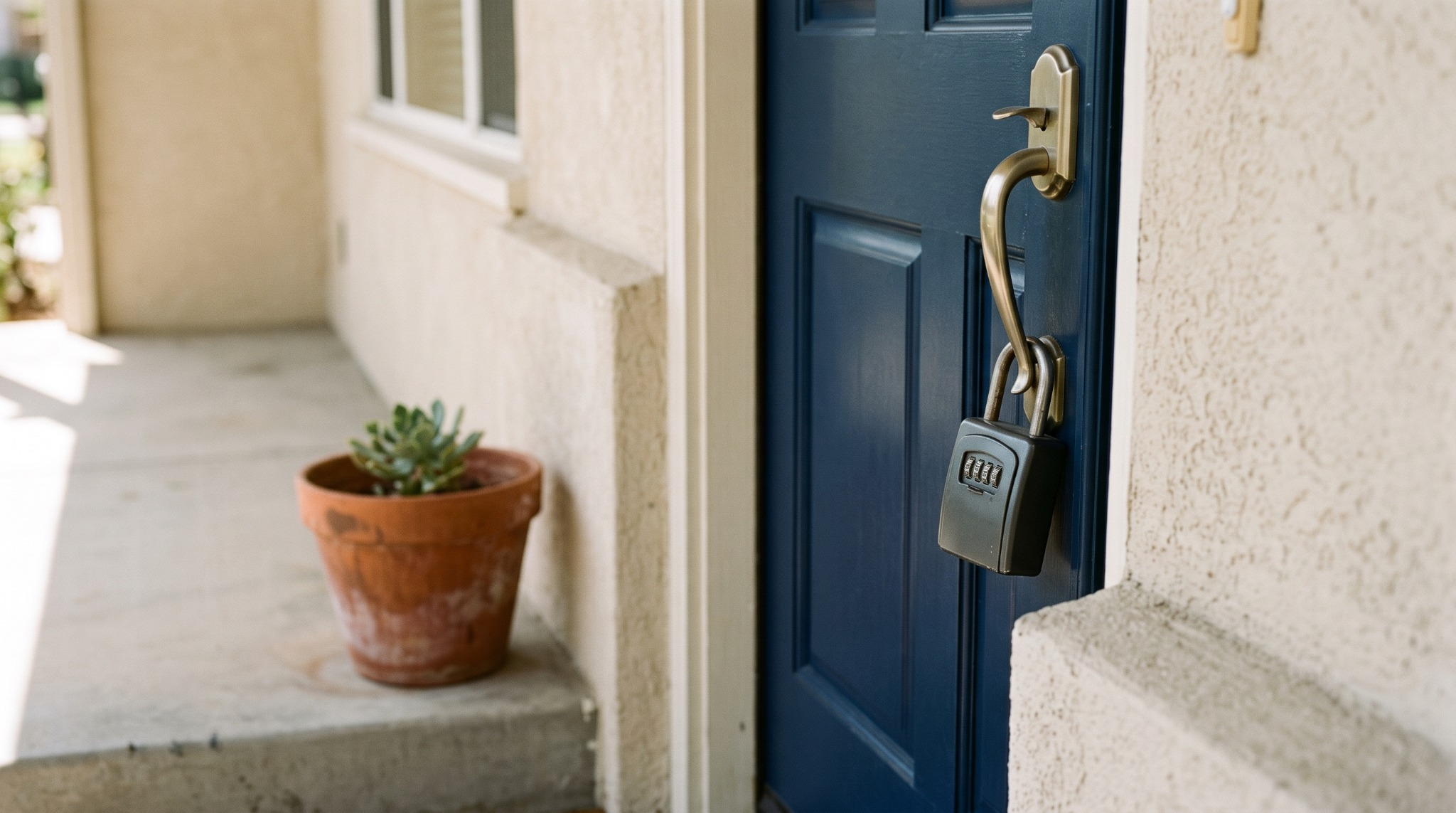
When you live far away, the hard part isn’t the lock. It’s who opens it, when, and who checks the house afterward. Write the plan down before the first visit.
Step 1 Choose one point person
You, a relative nearby, a neighbor you trust, your agent or a property manager. One person, so nobody wonders who’s in charge.
Step 2 Decide who holds the keys
Keep the keys or the lockbox code with the point person. Write down everyone who has a copy. If former tenants or helpers had keys, think about changing the locks.
Step 3 Approve every visit first
Who is coming, when and why: a contractor, a cleaner, an appraiser, a buyer. No surprise visits.
Step 4 Check the house after each visit
Doors locked, windows shut, no water on the floor. The point person sends you a quick text or photo.
Step 5 Ask every buyer what they need
Before anyone looks at the house for a sale, ask who has to let them in, how long they’ll stay and whether your point person should be there.
The example further down shows how one sale worked when the owners couldn’t easily get to the house.
Utilities in a vacant home: what to check before you change anything
It’s tempting to shut everything off. Before you do, ask your insurer whether your policy has conditions about heat, water or alarms in an empty house.

Power. Keeps lights on timers, an alarm and anything you’re leaving plugged in. Ask before you turn it off.
Water. A slow leak in an empty house runs until someone notices. Decide with your insurer whether to shut the main valve, and who checks it on visits.
Gas. If nobody needs heat or hot water, ask PG&E or your local utility how to shut it off safely.
Mail. Forward it, so the house doesn’t look abandoned and you don’t miss tax or insurance bills.
What a vacant home costs you each month
Use this monthly cost table with your own bills. Your numbers matter more than anyone’s average.

| Cost | How to get a monthly number | Your amount |
|---|---|---|
| Mortgage payment | The amount on your statement. | $______ |
| Property tax | Yearly bill divided by 12. Skip it if it’s already in your mortgage payment. | $______ |
| Insurance | Yearly premium divided by 12. Use the new premium if your policy changes. Skip it if it’s in your mortgage payment. | $______ |
| HOA dues | Monthly dues, if the house has them. | $______ |
| Utilities | Power, water, gas, trash, and any alarm or internet service. | $______ |
| Yard and upkeep | Gardener, cleaning, small repairs. | $______ |
| Travel | Trips to check on the house, or what you pay someone to check it. | $______ |
| Total monthly cash outflow | Add the rows above. | $______ |
Don’t count anything twice. Your monthly mortgage payment may include money for property taxes and insurance, held in an escrow (or impound) account. Check your statement. If it does, don’t add those bills again.
Keep one-time costs separate. Cleanout, repairs, paint and staging happen once, before a sale, and they depend on which option you pick.
Then ask the real question. Multiply your total by the months you expect to wait. Will the extra money you hope to get by waiting cover that cost, plus the work and the uncertainty?
If you inherited the house with a loan on it, our guide to inheriting a house with a mortgage in the Bay Area covers those costs in more detail.
Your options for a vacant home: keep it, rent it, list it, or sell as-is
There’s no single right answer. It depends on the house, your numbers and how much you can manage from where you live.
Keep it for now
Can make sense when: you’re not ready to decide, family members still need to agree, or you need time to sort belongings.
Watch out for: each month adds to the total in your monthly cost table. Ask your insurer how a longer vacancy affects your policy.
Rent it
Can make sense when: you want to keep the house long term and someone can get it ready, find a tenant and manage it.
Watch out for: repairs before a tenant moves in, and ask your insurer what coverage you need once it’s rented.
List it with an agent, with or without repairs
Can make sense when: the house is in good shape or you can pay for repairs, and someone can handle showings. An agent can list it as it is or after repairs you choose.
Watch out for: commission, prep costs and the monthly costs while it’s on the market. Ask the agent how showings and lockbox access will work while you’re away.
Sell as-is to a direct buyer
Can make sense when: the house needs work you don’t want to pay for, or repairs and showings are hard to manage from where you live.
Watch out for: compare the written offer and its terms against what you’d likely walk away with after listing.
What this looked like in one sale
This is what happened in one sale. Every house and every family is different.
Selling a vacant home from different states
In July 2024 two sisters who lived in different states were selling their late parent’s vacant three-bedroom house in Redwood City. It needed repairs, and neither of them could easily get there. We visited, explained the offer, and they signed electronically with help from family.
Questions about insuring a vacant home
Select a question to see the answer.
Does homeowners insurance cover a vacant house?
When it comes to insuring a vacant home, it depends on your policy. California’s insurance department lists losses to a house vacant for 60 days or more among perils a homeowners policy generally doesn’t cover. Call your insurer, use the questions above and get the answer in writing.
Can I sell a vacant house if I live out of state?
Yes, owners do it. The practical questions are who lets people in, how you’ll sign, and who looks after the house until closing. Set up the access plan first, and ask your escrow or title company how signing works when you can’t be there in person.
Should I empty the house before I sell?
Not before two calls. Ask your insurer whether clearing out the furniture changes how your policy sees the house. Then ask whoever you’re selling through, an agent or a buyer, what they need left or removed.
Related guides
Sources
Checked October 23, 2026.
- California Department of Insurance, Residential Insurance Guide: the perils a homeowners policy generally doesn’t cover, including losses to a house vacant for 60 days or more, and asking your insurer for clarification in writing.
- Consumer Financial Protection Bureau, What is an escrow or impound account?: how property taxes and insurance can be paid through your monthly mortgage payment.

About the author
Juan Diaz
Founder & CEO, Twin Home Buyer
Juan Diaz is the founder and CEO of Twin Home Buyer. He has been investing in Bay Area real estate since 2002. Through Twin Home Buyer, his team helps homeowners considering a direct sale of their property.
Want to see what an as-is sale would look like?
Tell us about the house and we’ll walk you through it: a written cash offer, no repairs on your end, and a closing that can happen in as little as 7 days.
If listing with an agent turns out to be the better fit for you, we’ll say so.
Request a Cash Offer