The short answerYou still have to disclose. As-is means you don’t fix it. It doesn’t mean you don’t tell. In California, the Transfer Disclosure Statement can’t be waived just because the sale is as-is, and when you don’t know an answer, the rule is simple: answer what you know, honestly. Ask your attorney how to word your answers.
Stuck on the forms? Call (415) 415-8946 or use our contact form.
Getting started
“I’m selling as-is, so why do I still have pages of disclosure forms? What do I write when I don’t know the answer?” Selling as-is usually means you won’t make repairs. It doesn’t erase your duty to share what you know about the house. That’s hard when you inherited a home you never lived in, or rented it out for years and weren’t there day to day.
Does selling a California house as-is mean I can skip disclosures?
No. “As-is” and “disclosure” answer two different questions.
As-is is about repairs. It tells the buyer you’re selling the house in its current condition and you aren’t fixing anything first.
Disclosure is about information. It’s what you tell the buyer about that condition.
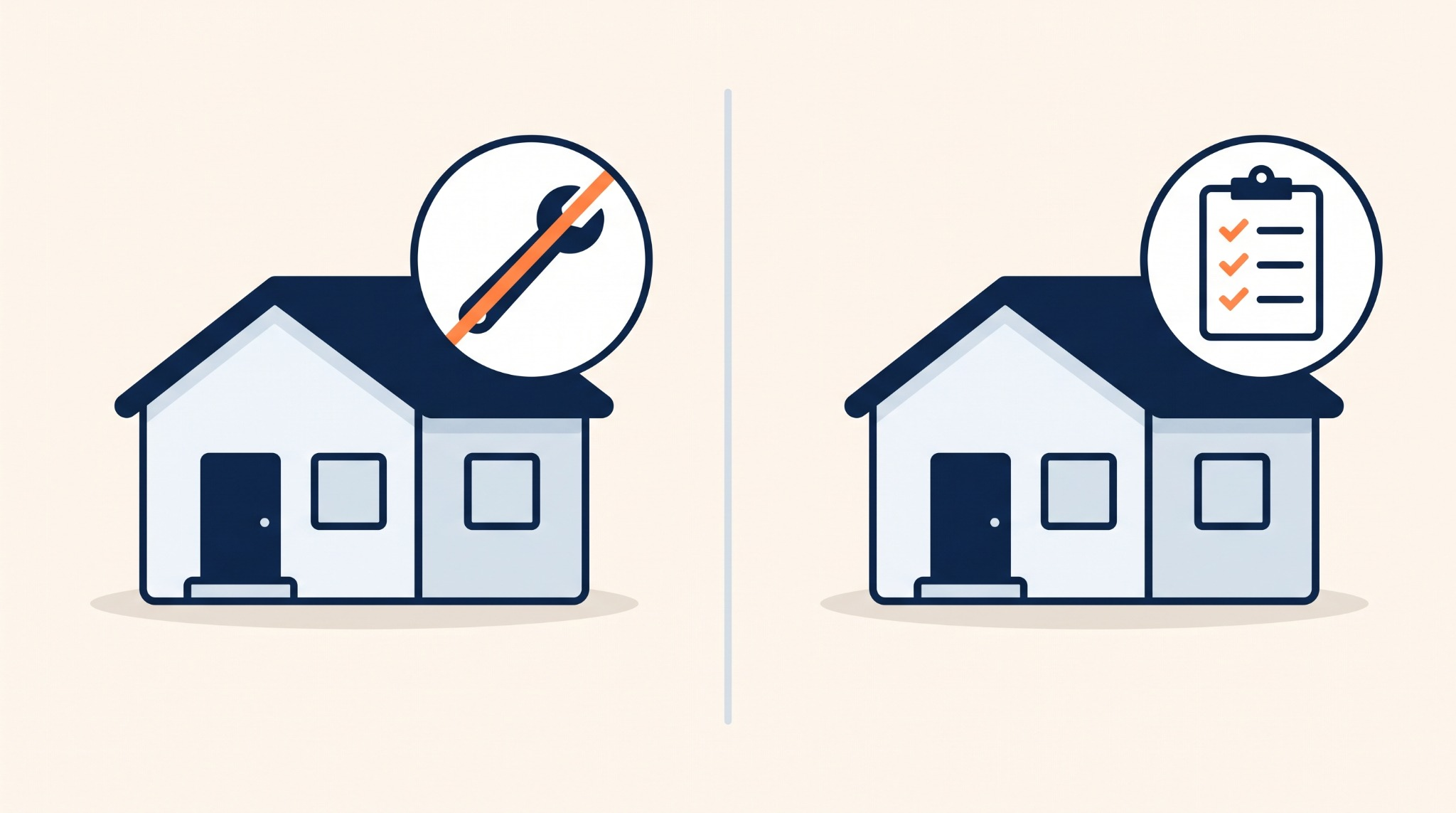
California’s disclosure law covers sales of single-family residential property, with listed exceptions. The Legislature spelled out that the Transfer Disclosure Statement “may not be waived in an ‘as is’ sale.” The same law says any waiver of its requirements is void as against public policy. Ask an attorney how this applies to your contract.
The law also says it was not meant to change the duty to disclose facts that materially affect a property’s value and desirability.
Forms can slow a sale. See 7 Things That Slow Down an As-Is Sale.
What is the Transfer Disclosure Statement (TDS) in California?
The Transfer Disclosure Statement, or TDS, is the seller’s disclosure form written into California law.

What does the TDS ask about?
The statute requires the disclosures to be made on a copy of the form it sets out. In plain words, the TDS walks through the home and asks what you know about its condition. The law also keeps your duty to share the property’s physical condition and reports you’ve already received.
If a question covers something you never saw or heard about, tell your agent or attorney. We cover that below.
Does California require the TDS for every inherited home?
Not always. But inheriting the house is not, by itself, an exemption.
The law lists some sales that are exempt, such as sales ordered by a probate court in the administration of an estate and sales by a fiduciary administering a trust or a decedent’s estate. Ask an attorney if yours is one.
What is the Seller Property Questionnaire, and how is it different from the TDS?
Why am I being asked to complete another form?
The Seller Property Questionnaire, or SPQ, is a form published by the California Association of REALTORS® (C.A.R.), a statewide trade association. It is not the form set out in the Civil Code. Your agent can tell you whether your sale uses it and how it fits with the TDS.
Treat the SPQ the same way as the TDS, and tell your agent which questions you can’t answer.
| TDS vs. SPQ | Transfer Disclosure Statement (TDS) | Seller Property Questionnaire (SPQ) |
|---|---|---|
| Purpose | The state’s disclosure form for the home’s condition | A separate C.A.R. form; ask your agent |
| Source | California Civil Code §1102.6 | C.A.R., a trade association (not the Civil Code form) |
| Type of questions | The property’s condition and inspection reports already received | Ask your agent |
What should I write if I don’t know the answer?
Answer what you know, honestly. That’s the rule. Every disclosure has to be made in good faith, and the statute defines good faith as “honesty in fact in the conduct of the transaction.”
Don’t guess. Don’t leave out what you know. Three common situations:
What if I inherited the house and never lived there?

You may not know when the roof was last done, what was repaired, or what broke years ago. If you already have receipts, permits or inspection reports that came with the house, they can help you answer. You don’t have to search for anything.
Sellers share what they know. Ask your attorney how to mark a question you can’t answer.
What if the property was rented out for years?
Tenants may have fixed small things without telling you, reported problems to a property manager, or lived with issues nobody passed along.
If you already have maintenance requests, contractor invoices or notes from your property manager, they can help you answer. You don’t have to search for anything.
What if I know about an old repair or possible mold?
A past leak, a patch job, or a spot that looked like mold is information you already have. Say it in plain words. Don’t guess at causes.
If the old repair is bigger, like a garage turned into living space, our guide on selling a home with a converted garage covers that situation.
When should I ask a real estate agent or attorney for help?
Talk to a real estate attorney or a licensed agent before you fill in the forms if:
- There’s a lawsuit. Talk to an attorney first. The wording matters.
- You know about a structural defect. Ask an attorney how to describe it.
- You don’t know how to describe a condition. If you’re unsure whether something counts, or how to say it, get advice before you write.
We’re not a substitute for an attorney or a licensed real estate professional. If your situation needs legal advice, get it first. Your other options: list with an agent, repair first if you have the time, or wait until you feel ready. A direct sale may not be your best next step, and it’s better to know that before you sign anything.
How did one Bay Area sale handle disclosures with the sellers abroad?
Selling from outside the country
Early 2026, near Redwood City. Sellers were living outside the country. They struggled with the disclosure forms. Twin Home Buyer told them to answer what they knew. They signed with a remote notary.
If you’re handling a Bay Area sale from far away, our guide to selling before you move or from far away covers keys, signing and the empty house. Ask your agent, attorney or escrow officer early how signing will work for your sale.
Frequently asked questions
Can I change my disclosures if I learn something later?
The law allows a written amendment. Ask your agent or attorney how and when.
Is a sale to a family member treated differently?
It can be. The TDS rules list sales to a spouse or to blood relatives of the seller among the exceptions. Have a professional confirm whether your sale fits before you skip any form.
Related guides
Legal details: This is general information, not legal, tax or insurance advice. Confirm your situation with a real estate attorney before you act.

About the author
Juan Diaz
Founder & CEO, Twin Home Buyer
Juan Diaz is the founder and CEO of Twin Home Buyer. Juan started at 12, sweeping the homes his Uncle George bought in Oakland. Raised in East Oakland, he’s been flipping homes since 2005: 20+ years making homes beautiful and improving the communities he grew up in. Through Twin Home Buyer, his team helps homeowners considering a direct sale of their property.
Still unsure about selling your house as-is?
As-is means you don’t have to fix the house. It doesn’t mean you skip telling the buyer what you know. You can list with an agent, get legal advice first, or look at a direct sale. If the paperwork is what’s holding you back, call us at (415) 415-8946 or use our contact form, and we’ll explain how the disclosure process works before you decide anything.
Who we are: Twin Home Buyer is a local cash home buyer. We buy the house as-is, with no repairs. Don’t clean on the way out: leave what you don’t want, and we take care of it. We’re not agents, so there’s no commission. We pay all closing costs. The offer comes with no obligation and no pressure. Licensed contractor: Matrix Group One, CSLB #1066892.
